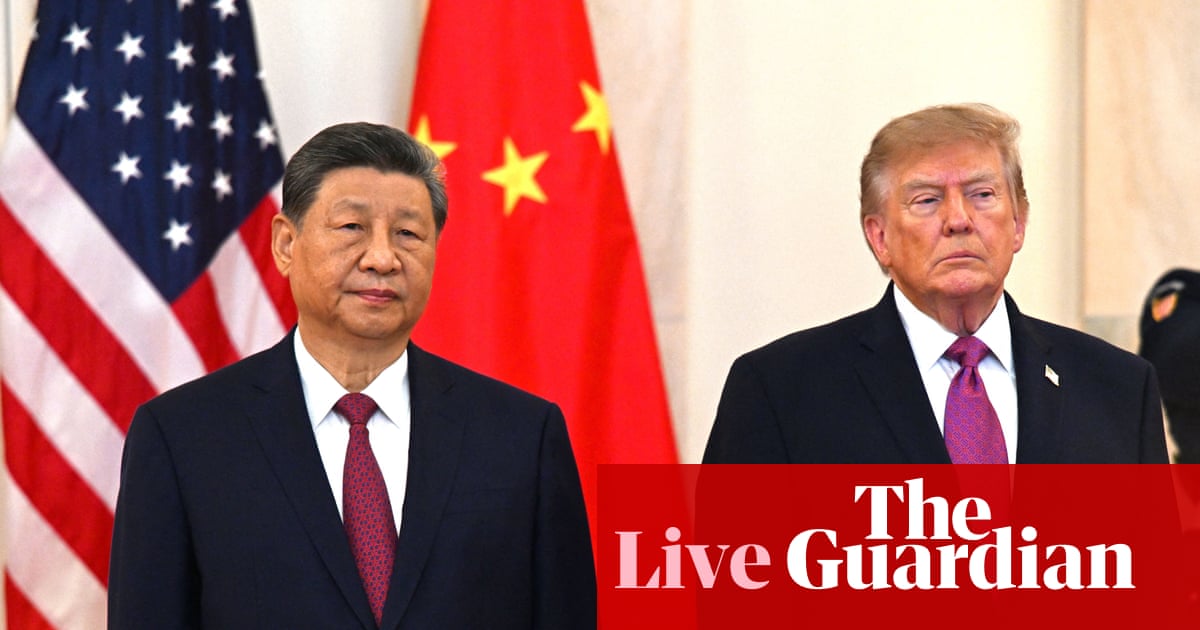
Chinese President Xi Jinping arrived at the White House on the morning of Thursday, September 24, 2026, launching the most significant bilateral engagement between Washington and Beijing in more than a decade. The visit marks Xi's first official state visit to the White House in over ten years and comes at a moment of deep strategic friction between the world's two most powerful nations. Artificial intelligence governance, trade tensions, Taiwan, and broader geopolitical flashpoints including Iran and Ukraine are all expected to dominate the agenda as Trump and Xi begin formal talks in the Oval Office, followed by a White House state dinner in the evening. The summit arrives as the two countries work to extend a monthslong tariff truce even as competition over advanced AI technology intensifies, and as Chinese analysts express deep skepticism about the prospects for any major breakthrough.
The Stakes Behind the Summit
The Trump-Xi summit carries weight that extends far beyond a single day of diplomacy. The United States and China together account for roughly 40 percent of global GDP, and their relationship shapes everything from semiconductor supply chains to the future of artificial intelligence governance to the security architecture of the Indo-Pacific. With both nations racing to set global standards for advanced AI, and with Taiwan remaining the most sensitive potential flashpoint between them, the outcomes of Thursday's talks will be watched closely by governments, markets, and technology companies around the world.
The visit also arrives amid a complex global backdrop. The United States is navigating simultaneous pressures from the war in Ukraine, tensions with Iran, and a fragile tariff truce with Beijing that both sides have an interest in preserving but neither fully trusts. For Trump, the summit offers an opportunity to demonstrate personal diplomatic skill on the world's most consequential bilateral relationship. For Xi, it represents a chance to press Beijing's positions on Taiwan and trade while shaping the emerging global rules around AI at a moment when China is investing heavily in becoming a leader in the field.
AI Governance Tops the Agenda
Artificial intelligence emerged as the most prominently discussed topic even before the two leaders sat down together. Trump flagged AI as a major subject ahead of the meeting through social media posts, and Xi arrived with a clear framing of his own. Speaking at the start of the bilateral session, Xi emphasized that China and the United States share a responsibility to manage AI development as leading nations in the industry, and that the technology must always remain under human control.
The emphasis reflects a broader global anxiety about the pace of AI advancement and the absence of binding international frameworks to govern it. Both Washington and Beijing are investing heavily in AI capabilities, and each sees the other as its primary strategic competitor in the technology space. The gap between them on how AI should be governed — and who gets to set those rules — is wide, making Thursday's conversations on the topic especially consequential. The Hill reported that Xi framed AI governance as an obligation shared by both countries given their status as leading nations in the industry.
Beyond AI, the tariff relationship between the two countries remains fragile. The two sides have maintained a monthslong truce on new tariffs, but the underlying disputes over manufacturing, market access, and technology transfer that triggered the trade war remain unresolved. Extending that truce — and potentially moving toward a more durable framework — is a clear priority for both sides heading into the summit.
Xi's Framework for Avoiding Conflict
Xi used the opening of the bilateral meeting to lay out a structured vision for how the two countries might avoid the kind of military confrontation that has historically accompanied the rise of a great power challenging an established one. Speaking with Trump present, Xi called for strengthened communication between the two nations, candid and sustained dialogue, and the ability to seek common ground while managing differences. He proposed that the two militaries maintain regular dialogue and improve mechanisms for crisis communication and prevention.
The Chinese president explicitly invoked the concept of the Thucydides trap — the idea that tensions tend to escalate when an emerging power challenges the dominance of an established power — and argued that it could be overcome through the right framework of engagement. Xi had raised the same concept during his meeting with Trump in Beijing in May, framing it as a shared challenge that both leaders bore responsibility for addressing. The repetition signals that Beijing views the avoidance of military conflict as a foundational goal of the bilateral relationship, one that must be actively managed through institutional mechanisms rather than left to chance.
Xi's core message was that China and the United States stand to gain from cooperation and will both lose from confrontation — a formulation that has become a standard element of Beijing's diplomatic messaging but one that carries particular weight when delivered directly to a US president in the Oval Office.
The Taiwan Question Looms Large
While AI and trade dominated public previews of the summit, Taiwan remains the issue with the greatest potential to destabilize the relationship. Beijing considers Taiwan a part of China and has not ruled out the use of force to bring it under its control, while Washington maintains a policy of strategic ambiguity toward the island's defense. Xi is expected to press Washington on its position toward Taiwan during the talks, and the issue is likely to surface in both the bilateral session and the state dinner.
The Washington Post noted that Xi is expected to press Washington directly on Taiwan during the summit, even as Trump seeks Chinese cooperation on other fronts including manufacturing and restraint on Iran. The competing demands on both sides illustrate the structural complexity of the relationship: each nation needs the other's cooperation on some issues even as they compete fiercely on others.
A Relationship Still Searching for Stability
The May meeting in Beijing between Trump and Xi produced a joint commitment to what the two sides called constructive strategic stability — language designed to acknowledge the depth of competition while leaving room for cooperation where interests align. Four months later, Chinese analysts see limited grounds for optimism about major breakthroughs. The bilateral relationship, per reporting from CBS News, appears as strained as ever despite the diplomatic engagement, with deep mistrust and suspicion continuing to shape how each side approaches the other.
Chinese analysts have signaled that Trump should understand that pressure does not produce the outcomes Washington seeks from Beijing — a view that reflects the limits of what either side can realistically extract from the other through bilateral summitry alone. The structural drivers of competition — technological rivalry, economic friction, and competing visions for the international order — are not problems that a single meeting can resolve.
The Pageantry and the Substance
The summit opened with an elaborate White House arrival ceremony featuring military bands and fighter jet flyovers, underscoring the formal significance the Trump administration attached to the visit. Vice President JD Vance and his wife Usha Vance, Secretary of State Marco Rubio, and Treasury Secretary Scott Bessent were among the US officials present for the arrival, along with Trump's daughter Ivanka Trump and her daughter Arabella. The presence of senior cabinet officials signaled that the administration views the summit as a substantive policy engagement rather than a purely symbolic occasion.
The state dinner scheduled for Thursday evening adds a layer of personal diplomacy to the formal talks, giving the two leaders an extended opportunity to engage outside the structured setting of the Oval Office. Such settings have historically produced some of the most consequential outcomes in US-China diplomacy, even as the structural tensions between the two countries continue to shape the broader trajectory of the relationship.
What the Summit Means for the World
The Trump-Xi summit arrives at a moment when the global order is under pressure from multiple directions. The war in Ukraine continues to reshape European security calculations, tensions in the Middle East remain acute, and the race to govern emerging technologies is accelerating. How the world's two largest economies manage their relationship in this environment will have consequences far beyond their own borders, affecting global supply chains, technology standards, climate cooperation, and the prospects for peace and stability across multiple regions simultaneously.
For all the pageantry and the carefully staged statements, the real test of the summit will be whether it produces concrete outcomes — on AI governance frameworks, on the tariff truce, on crisis communication mechanisms between the two militaries, and on the broader question of whether the Thucydides trap can indeed be managed through sustained diplomatic engagement. The world will be watching closely to see what the two leaders actually deliver.
Timeline of Key Events
- May 2026 — Trump and Xi meet in Beijing, agree to pursue constructive strategic stability
- Months preceding September 2026 — US and China maintain a fragile tariff truce amid ongoing trade tensions
- September 24, 2026 (morning) — Xi arrives at the White House for elaborate arrival ceremony with military bands and fighter jet flyovers
- September 24, 2026 (morning) — Trump and Xi begin bilateral talks in the Oval Office; Xi lays out terms to avoid military conflict and invokes the Thucydides trap
- September 24, 2026 — Xi calls for AI to always remain under human control; Trump describes relationship as a truly great friendship
- September 24, 2026 (evening) — State dinner at the White House concludes the day's formal engagements
Frequently Asked Questions
Why is this Xi's first White House state visit in over a decade?
The last official state visit by a Chinese leader to the White House was more than ten years ago. The long gap reflects the deterioration of the US-China relationship over that period, driven by trade wars, technological competition, geopolitical rivalry in the Indo-Pacific, and deep mutual suspicion. The May 2026 meeting in Beijing between Trump and Xi set the stage for this visit by establishing a commitment to constructive strategic stability.
What is the Thucydides trap and why did Xi invoke it?
The Thucydides trap is a concept drawn from ancient Greek history describing the tendency toward military conflict when an emerging power challenges the dominance of an established power. Xi invoked it to frame the US-China relationship as one that requires active management to avoid confrontation, proposing specific mechanisms — including regular military dialogue and improved crisis communication — as ways to overcome the dynamic.
What is the status of US-China trade relations heading into the summit?
The two countries are operating under a monthslong tariff truce that both sides have an interest in extending, but the underlying disputes over manufacturing, market access, and technology transfer that triggered the trade war remain unresolved. Extending the truce and potentially building toward a more durable trade framework is a stated priority for both sides entering the summit.
How does Taiwan factor into the talks?
Taiwan is expected to be one of the most sensitive topics of the summit. Beijing considers Taiwan part of China and has not ruled out using force to achieve unification, while Washington maintains a policy of strategic ambiguity regarding the island's defense. Xi is expected to press Washington directly on its Taiwan policy during the bilateral session.
What did Xi say about AI governance?
Xi stated that China and the United States share both the capability and responsibility to develop and manage AI for good, and that AI development must always remain under human control. The statement reflects Beijing's interest in shaping global AI governance frameworks at a moment when both countries are racing to lead in advanced AI technology.
What Happens Next
The immediate aftermath of the summit will be measured by what concrete commitments emerge from the talks — whether on AI governance frameworks, the extension of the tariff truce, or new mechanisms for military-to-military communication. The state dinner on Thursday evening will offer both leaders a less formal setting to continue the conversation, but the real work of translating summit language into durable policy will unfold in the weeks and months that follow.
For now, the fact that the two leaders are sitting down at all represents a significant diplomatic moment. The first Chinese state visit to the White House in more than a decade is a reminder that even the most competitive bilateral relationship in the world requires channels of communication. Whether those channels can produce outcomes that meaningfully reduce the risk of confrontation — on Taiwan, on AI, or on the broader structural tensions between the two powers — is the question the summit was always designed to address, and the one the world will be watching to answer.
More from the Foreign Policy desk
 New
Witkoff's Praise of Putin as Humanitarian Sparks GOP Backlash
Special envoy Witkoff called Putin a humanitarian after freeing an American. Lawmakers push back hard, and Trump links the…
 New
Trump's Putin Summit Drawbacks: GOP Pushback on Ukraine Diplomacy
Trump's push for a trilateral US-Russia-China summit is drawing sharp opposition from Republican lawmakers and complicating…
 New
Trump Waives Russia Sanctions, Igniting Bipartisan Backlash
President Trump's late-night executive order suspending Russia sanctions drew sharp criticism from GOP lawmakers and deepened…
 New
Senators Demand Pentagon Probe Into Ukraine Starshield Cutoff
Bipartisan senators call for a Pentagon inspector general investigation into whether the Trump administration restricted…