
The White House on Friday night formally removed CNN from the presidential press pool ahead of President Donald Trump's trip to Tennessee on Saturday, barring the network from flying aboard Air Force One to cover a college football game in Knoxville. The move marks the most visible escalation yet in the administration's ongoing campaign to restrict CNN's access to the president, coming just days after a federal judge temporarily blocked an earlier White House ban on the network's reporters. The incident has drawn widespread attention from press freedom advocates and bipartisan observers, raising fresh First Amendment questions about the executive branch's control over media access to the president.
The Pool Exclusion and What It Means
The television press pool is a long-standing arrangement in which a rotating group of major networks shares the responsibility of physically covering the president during travel and official events. The footage and reporting produced by the pool are distributed to all member networks, ensuring that broadcasters across the country have consistent visual and factual coverage of presidential movements. By removing CNN from Saturday's pool roster without naming a replacement, the White House disrupted that shared infrastructure at a moment when the president was traveling for a high-profile public appearance.
According to NBC News, the White House released its official media guidance Friday night listing the outlets designated for pool coverage of the Tennessee trip, and CNN was absent from that list. The network had confirmed its scheduled participation earlier, including its planned seat aboard Air Force One. The Washington Post first reported CNN's exclusion from the flight. The Guardian noted that the White House did not immediately respond to a request for comment on the decision.
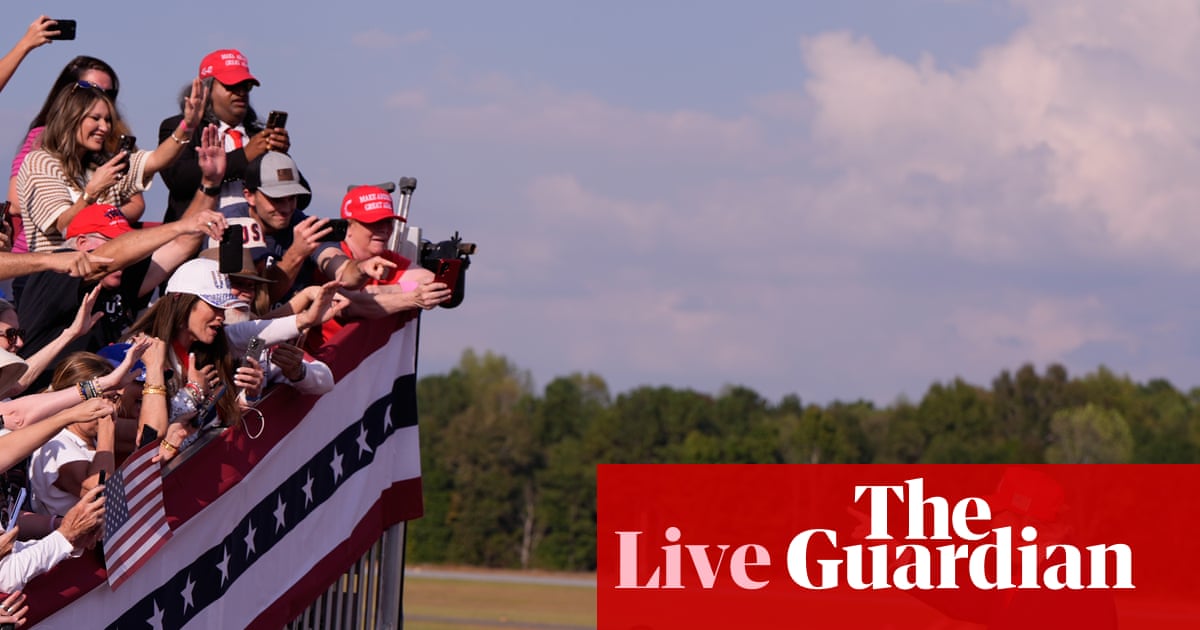
The trip itself carried significant public profile. Trump was traveling to Neyland Stadium in Knoxville to attend a matchup between the University of Texas Longhorns and the University of Tennessee Volunteers — a marquee college football contest that drew the president's attention as a public-facing event. College football holds particular cultural resonance in the South, and presidential attendance at high-profile games is a well-established tradition.
A Week of Escalation
The Air Force One exclusion did not occur in isolation. It is part of a broader and intensifying pattern of the White House moving to limit CNN's access to the president and his events. The previous week, the administration had gone further still, formally revoking White House press credentials for reporters from CNN, MS NOW, and Politico. That move prompted immediate legal pushback, and a federal judge issued a temporary restraining order on Thursday requiring the administration to restore those credentials for a 14-day period.
However, the court order carried a significant limitation. While it mandated the restoration of White House building access for the three outlets' reporters, it did not explicitly require the White House to reinstate CNN's participation in the television pool. That legal distinction created a window the administration appears to have acted on immediately, removing CNN from the Air Force One manifest the very next day. The maneuver illustrated how carefully the White House has calibrated its restrictions to operate within — or at the edges of — existing legal boundaries.
The broader context of the administration's media strategy has been defined by Trump's longstanding characterization of mainstream outlets, and CNN in particular, as producers of what he calls fake news. His Truth Social post early Saturday reiterated that framing, asking why outlets responsible for negative coverage should be permitted in what he described as a very sacred place. The post reflected the personal dimension that has consistently shaped the president's approach to press relations throughout his time in office.
Bipartisan Concern and Press Freedom Response
The White House's decision to exclude CNN from the pool triggered reactions across the media and political landscape. The move was seen by many observers as a significant step beyond credential disputes, because the TV pool serves a functional role that affects all major networks' ability to cover the president, not just the excluded outlet. When one network is barred from the pool, the shared coverage system that American broadcasters have relied on for decades is directly disrupted.
The brief boycott earlier in the week by Fox News, ABC News, CBS News, and NBC News demonstrated that other pool members were willing to take collective action in response to CNN's initial exclusion. That solidarity boycott was a notable moment in press pool history, reflecting how seriously established networks view the principle of inclusive pool membership. Whether that solidarity would extend to the new exclusion on the Tennessee trip remained an open question as events unfolded.
Press freedom organizations and First Amendment advocates flagged the Air Force One exclusion as part of a concerning pattern of executive branch pressure on news organizations whose coverage the president finds unfavorable. The ability of the White House to control which journalists travel with the president, and under what conditions, carries implications that extend beyond any single network or trip, touching on the broader question of whether a president can selectively determine which outlets receive the access necessary to fulfill their role in a democratic system.
Political Context and the Road Ahead
The Tennessee trip itself unfolded against a backdrop of other significant national developments. The Hill's live coverage of the day placed the president's attendance at the football game alongside reporting on U.S.-China trade negotiations, where the two countries were moving toward cutting tariffs on approximately $30 billion worth of goods. That broader policy context underscored how a presidential trip framed around a sporting event could still intersect with substantive governance questions.
The legal situation surrounding the White House press credentials remains in flux. The 14-day temporary restraining order issued last week provides a window during which CNN, Politico, and MS NOW reporters are entitled to White House access, but that order is set to expire, and the underlying legal dispute over the administration's authority to revoke credentials on ideological grounds will continue to play out in the courts. The TV pool question — whether the White House can exclude a network from pool participation while still granting individual reporters building access — represents a separate but related legal and institutional question that may also face judicial scrutiny.
The absence of a named replacement for CNN in Saturday's pool roster left the coverage arrangement in an unusual state. The practical effect was that the remaining pool members would need to absorb CNN's share of coverage responsibilities, or that certain angles of the president's trip might receive less comprehensive visual documentation than a full five-network pool would provide. Either outcome represented a tangible change in how presidential travel is covered by American television.
Frequently Asked Questions
What is the presidential press pool and why does it matter?
The presidential press pool is a rotating arrangement among major television networks — including Fox News, ABC News, CBS News, NBC News, and historically CNN — to share the costs and logistics of physically covering the president during travel and events. Pool footage is distributed to all member networks, ensuring consistent access to visual coverage of the president for the American public. When a network is excluded, the shared system breaks down.
Why was CNN specifically targeted?
Trump has repeatedly criticized CNN's coverage of his presidency as unfair and negative, referring to the network pejoratively on social media and in public remarks. The White House's actions against CNN appear directly tied to that longstanding grievance, with the president's Truth Social posts explicitly linking the network's exclusion to the quality and tone of its reporting.
What did the federal judge's ruling actually require?
The temporary restraining order required the White House to restore physical access credentials for CNN, Politico, and MS NOW reporters for 14 days. However, the ruling did not explicitly mandate that CNN be reinstated in the television press pool, leaving that specific access question unresolved and creating the condition the White House acted on.
Did other networks support CNN?
Yes. Earlier in the week, Fox News, ABC News, CBS News, and NBC News briefly boycotted pool participation after Trump's initial ban on CNN, signaling that established networks viewed inclusive pool membership as a core principle worth defending through collective action.
What are the First Amendment implications?
Press freedom advocates and legal observers have raised concerns that the White House's pattern of selectively excluding specific networks from presidential access represents an effort to punish unfavorable coverage. The question of whether a president can constitutionally bar specific outlets from the press pool while allowing others remains an active area of legal debate and potential litigation.
What Happens Next
The immediate aftermath of the Tennessee trip will likely center on whether the remaining pool networks expanded their coverage to compensate for CNN's absence, and whether the White House faces further legal pressure to restore the network's full pool participation. The 14-day temporary restraining order on White House credentials remains in effect, but its expiration will reopen the legal front unless a broader court ruling intervenes.
Press freedom organizations are expected to continue monitoring the situation closely, and the question of pool access may draw additional attention if the White House extends its exclusions to future presidential trips. The broader institutional concern for journalism and democratic accountability is whether selective exclusion of specific outlets becomes a normalized tool of executive branch media management — a question that will likely play out in both courts and public opinion in the weeks ahead.
More from the Domestic Policy desk
 New
Trump Administration Pushes to Fast-Track East Potomac Golf Course Overhaul
President Trump announced plans to redevelop East Potomac Golf Links in Washington, D.C., setting a Nov. 15 start date and…
 New
Katie Zacharia Fired After 5 Days as White House Press Secretary
Katie Zacharia's five-day tenure as White House press secretary ended amid scrutiny over her legal credentials and a widely…
 New
Oregon School Shooting: 4 Killed at Silver Rail Elementary
A 16-year-old gunman killed three children and a teacher at Silver Rail Elementary in Bend, Oregon, before a bystander shot…
 New
Trump Cancels Plan to Livestream Fort Hood Shooter Execution
President Trump reversed the Pentagon's plan to livestream Nidal Malik Hasan's firing squad execution after global backlash,…