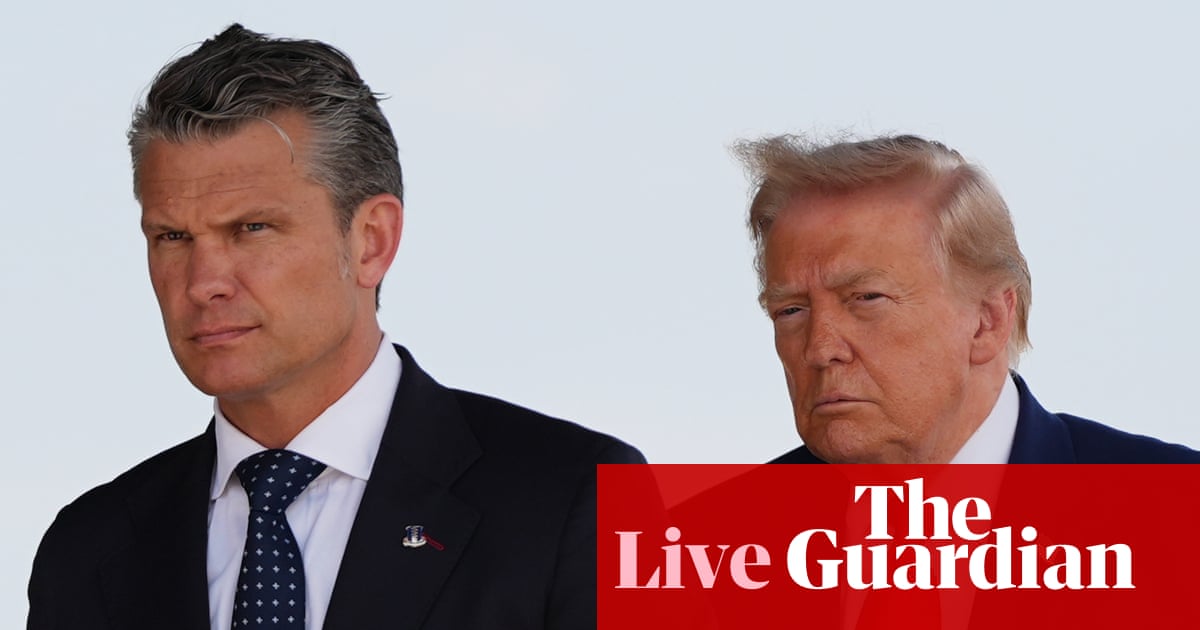
The United States and Iran appear to be shifting toward a diplomatic track after two weeks of intense hostilities, even as drone strikes attributed to Iran-backed groups targeted Saudi Arabia and other US allies in the region. President Donald Trump has publicly backed his defense secretary, Pete Hegseth, amid questions about the administration's strategy, while US officials clarify the contours of a proposed nuclear deal with Saudi Arabia that has raised nonproliferation concerns.
Main Story
The US-Iran conflict, which escalated dramatically over the past two weeks with US strikes on Iranian civilian infrastructure and Iranian retaliation against US allies, appears to be entering a new phase. According to Al Jazeera's Marah Rayan, the war has slowed, with both sides giving diplomacy a chance through regional mediators. However, President Trump has also been escalating in a different way by posting AI-generated images, and energy markets continue to search for alternatives as the crisis in the Strait of Hormuz drags on. Al Jazeera
Despite the apparent lull, drone attacks on Monday suggest that Iran or its proxies may be testing the new US stance. Saudi Arabia reported intercepting drones targeting oil facilities in its eastern province and Riyadh. The Saudi Foreign Ministry said it reserves the right to respond to the attack, which it attributed to Iran-backed armed groups in Iraq. Separately, Yemen's Houthi rebels claimed they had targeted Saudi crude oil transport infrastructure. It remains unclear whether the two incidents were coordinated or separate. Al Jazeera
Jordan and Iraq also reported drone attacks on Monday. Amman said it shot down two drones, while Iraqi security sources reported strikes on camps housing Iranian-Kurdish opposition fighters in the country's north. Officials did not identify the source of either attack, but Jordan and northern Iraq were locations where four US service members were killed over the past fortnight of conflict. Iraq later said in a statement that it was investigating the Saudi claim that the drones had been fired from its territory. Prime Minister Ali al-Zaidi stated that Iraq will not allow its territory to be used to launch attacks against neighboring countries. Al Jazeera
Why It Matters
The drone strikes come at a critical juncture. Following two weeks of intense hostilities, US officials have spoken of a change in strategy, and Washington has paused strikes on Iran. Iran has said it has also paused its attacks on US allies across the Gulf region. However, the drone attacks on Saudi Arabia and elsewhere suggest that Tehran may be testing the new US stance, and that the armed groups believed to be linked to Iran are not ready to follow suit. Al Jazeera
The situation also highlights the broader regional instability. The Houthis announced later on Monday that nine of its fighters had been killed amid escalating military confrontations with Yemeni government forces backed by the Saudi-led coalition in recent days. Al Jazeera
Political Context
On the political front, President Trump has publicly backed his defense secretary, Pete Hegseth, amid renewed tensions with Iran. When asked by a reporter if he is frustrated with Hegseth's advice on Iran early in the war, Trump expressed confidence in his defense secretary and said he thinks Hegseth has done a great job. Trump has said that Hegseth and others led him to believe that Iran was actively preparing for something, though the exact nature of that preparation remains unclear. The Guardian
Meanwhile, the US is pursuing a nuclear deal with Saudi Arabia that has raised concerns about proliferation. US Ambassador to the United Nations Mike Waltz appeared on Sunday morning shows to clarify aspects of the deal, which would eventually allow the Saudis to enrich uranium. Waltz stated that the US will not be exporting enrichment capability to Saudi Arabia under the deal. The Hill
The deal, announced last week, has sparked fears in the Persian Gulf region about a potential nuclear arms race. Waltz's clarification appears aimed at addressing those concerns, though the details of the agreement remain subject to negotiation and congressional oversight.
What Officials and Groups Are Saying
In a live press interaction, President Trump was asked about his level of frustration with Defense Secretary Pete Hegseth's advice on Iran early in the war. Trump responded by expressing confidence in Hegseth, stating that he thinks Hegseth has done a great job. The president noted that Hegseth and others had led him to believe that Iran was actively preparing for something, though he did not elaborate on what that preparation entailed. The Guardian
The Saudi Foreign Ministry, in a statement on Monday, said that the kingdom reserves the right to respond to the drone attack, which it attributed to Iran-backed armed groups in Iraq. The ministry did not specify what form a response might take. Al Jazeera
Iraqi Prime Minister Ali al-Zaidi said in a statement that Iraq will not allow its territory to be used to launch attacks against neighboring countries, and that the government is investigating the Saudi claim that the drones were fired from Iraqi territory. Al Jazeera
Yemen's Houthi rebels issued a statement claiming responsibility for targeting Saudi crude oil transport infrastructure, though it remains unclear whether their attack was coordinated with the drone strikes on oil facilities. Al Jazeera
US Ambassador to the UN Mike Waltz, appearing on Sunday morning shows, clarified that the US will not be exporting enrichment capability to Saudi Arabia under the new nuclear deal. He sought to allay fears that the deal could lead to a nuclear arms race in the region. The Hill
Timeline
- July 13-26, 2026: The US conducts intensive strikes on Iranian civilian infrastructure, including bridges, airports, electrical facilities, and a desalination plant. Iran responds by attacking US allies in the Gulf, striking their civilian infrastructure. Four US service members are killed in Jordan and northern Iraq.
- July 22, 2026: President Trump and Defense Secretary Hegseth attend the dignified transfer of the four fallen service members.
- July 26, 2026: The US announces a pause in strikes on Iran, and Iran says it has also paused attacks on US allies. Mediators suggest chances of a return to negotiations have risen.
- July 27, 2026: Drone strikes target Saudi Arabia, Jordan, and Iraq. Saudi Arabia intercepts drones targeting oil facilities. The Houthis claim an attack on Saudi crude oil transport infrastructure. Trump publicly backs Hegseth. Waltz clarifies the US-Saudi nuclear deal does not involve exporting enrichment capability.
Frequently Asked Questions
What is the current status of the US-Iran conflict?
The US-Iran war has slowed, with both sides giving diplomacy a chance through regional mediators. The US has paused strikes on Iran, and Iran has said it has paused attacks on US allies. However, drone strikes by Iran-backed groups on Saudi Arabia and other targets suggest that not all parties are ready to stand down. Al Jazeera
Why did Saudi Arabia get attacked by drones?
Saudi Arabia reported intercepting drones targeting oil facilities in its eastern province and Riyadh. The Saudi Foreign Ministry attributed the attack to Iran-backed armed groups in Iraq. Separately, Yemen's Houthi rebels claimed they targeted Saudi crude oil transport infrastructure. The attacks come amid a lull in US-Iran hostilities. Al Jazeera
What is the US-Saudi nuclear deal?
The US and Saudi Arabia announced a nuclear deal last week that would eventually allow the Saudis to enrich uranium. US Ambassador to the UN Mike Waltz clarified that the US will not be exporting enrichment capability to Saudi Arabia under the deal, aiming to address nonproliferation concerns. The Hill
Is President Trump still confident in Defense Secretary Pete Hegseth?
Yes. When asked if he was frustrated with Hegseth's advice on Iran early in the war, Trump expressed confidence in his defense secretary and said he thinks Hegseth has done a great job. Trump noted that Hegseth and others led him to believe that Iran was actively preparing for something. The Guardian
What are the risks of a forever war with Iran?
According to sociologist Ali Kadivar, speaking on Al Jazeera's UpFront, the history of US-Iran relations shows a risk of a forever war. The US has bombed Iranian civilian infrastructure, and Iran has responded by attacking US allies. The current pause in hostilities offers a chance for diplomacy, but the drone strikes indicate that armed groups may not be ready to cease attacks. Al Jazeera
What Happens Next
The coming days will be critical in determining whether the US-Iran conflict moves toward a diplomatic resolution or escalates again. The drone strikes on Saudi Arabia and other US allies may test the fragile pause in hostilities. If Iran-backed groups continue attacks despite Tehran's stated pause, the US may face pressure to respond, potentially derailing diplomatic efforts. Meanwhile, the US-Saudi nuclear deal will face scrutiny in Congress and from regional powers concerned about proliferation. President Trump's backing of Defense Secretary Hegseth suggests continuity in the administration's approach, but the president has also threatened strong military action if Iran talks fail. Readers should watch for further diplomatic signals from regional mediators and any official statements from Tehran regarding the drone strikes.
More from the Foreign Policy desk
 New
New
Trump Cancels Iran Strikes, Cites Agreed Deal Framework
President Trump cancels planned strikes on Iran, citing an agreed framework for a deal, amid Saudi pressure and Tehran's warnings.
 New
New
US, Israel Prepare Strikes on Iran Energy Targets
US and Israel are preparing to strike energy-related targets in Iran, sources say, as Tehran warns of retaliation and regional…
 New
New
US Plans Renewed Strikes on Iran as Tehran Vows Response
US reportedly plans renewed strikes on Iran as soon as this weekend, with Tehran vowing to respond, amid tensions over…
 New
New
Trump Approval Hits New Low Amid Iran War, Gas Prices
President Trump's approval rating falls to a second-term low as the Iran war drags on and gas prices surge, with analysts…