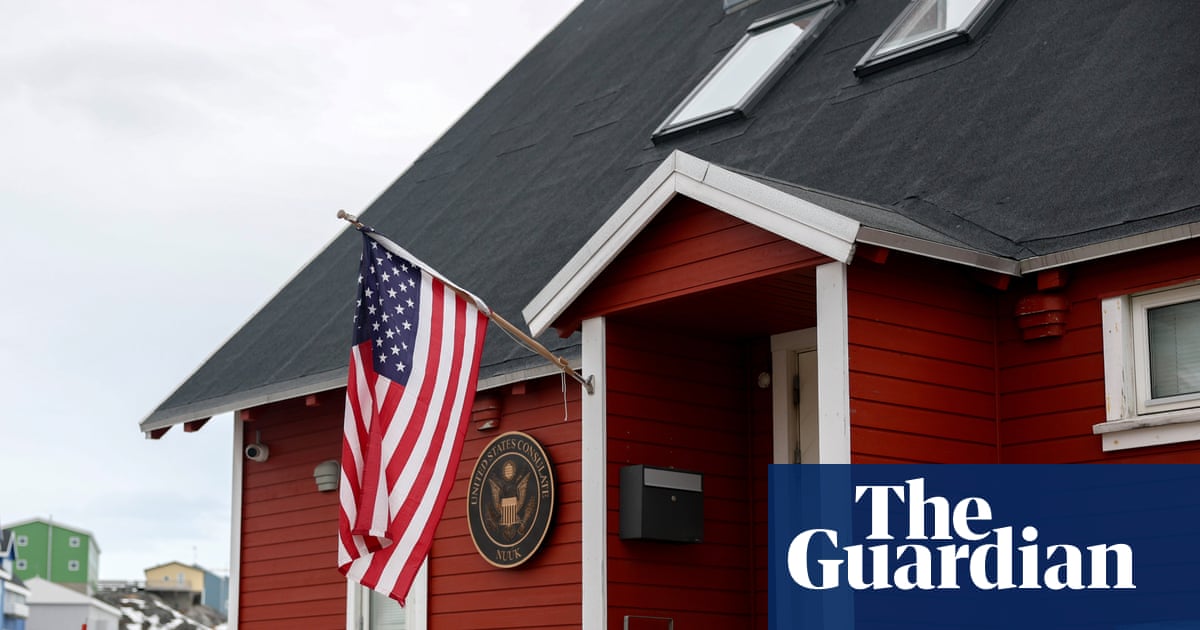
President Donald Trump announced on Friday that the United States has struck an Arctic security agreement with the leaders of Denmark and Greenland, capping months of threats to annex the semi-autonomous Danish territory by force. The deal would expand the American military footprint on the island and grant what Trump described as permanent control over security there, while Danish and Greenlandic officials say it preserves their sovereignty and the Greenlandic people's right to self-determination. The agreement is expected to be signed at the United Nations General Assembly in New York next week, though its full text has not been released and key details remain unresolved.
Main Story
Trump announced the agreement in a post on Truth Social, casting it as a personal triumph and claiming it gives the United States permanent control over security and all other needs in Greenland, fully addressing American concerns. He added that Washington would immediately begin developing a large military presence in what he called the appropriate part of Greenland, and that the deal would come at no cost to the United States.
The governments of Greenland and Denmark confirmed they had reached a deal with Washington. According to CBS News, two US officials said the agreement is expected to be signed in New York City on Tuesday, when world leaders gather for the United Nations General Assembly. Denmark's prime minister, Mette Frederiksen, confirmed the signing timeline and said the agreement strengthens common security in the Arctic and the North Atlantic area while recognizing the sovereignty and territorial integrity of the kingdom and the right of the Greenlandic people to self-determination.
The announcement follows months in which Trump repeatedly pushed to purchase or seize Greenland, arguing that the mineral-rich island is vulnerable to adversaries including Russia and China. He had even raised the possibility of military action, prompting an outcry from Danes and other NATO members. The new agreement stops far short of the outright takeover Trump had previously backed, according to the Washington Post, which reported that Danish officials described the deal as not final.
What the Deal Actually Contains
Details remain sparse because no text of the agreement has been released. But a State Department official outlined several provisions to CBS News. The United States is guaranteed permanent access to the island and overflight rights, allowing the military to potentially increase the number of bases. The deal blocks non-NATO members from establishing military bases in Greenland and restricts American adversaries from making sensitive investments there. It is also set to remain in place permanently, even if Greenland becomes a fully independent country, the official said.
PBS NewsHour reported a similar breakdown, describing the top line as permanent US basing, access and overflight rights, meaning the US can create new bases, fly over Greenland and retain that ability regardless of what Greenland chooses for its own political future. The agreement also bans non-NATO bases and creates a screening mechanism for investments aimed at keeping out Chinese and Russian money. In return, the Greenlandic population can choose its political future, including independence, and no territory of Greenland is transferred to the United States.
Trump said the deal includes a rule that no US adversary can maintain a military presence in Greenland or make sensitive investments there without express written approval. The island has hosted a US base on its western coast since the 1950s, and the United States already had a presence and the right to expand bases through NATO.
Why It Matters
The agreement resolves, at least temporarily, a diplomatic dispute that had rattled the transatlantic alliance. PBS reported that the US pressure campaign over Greenland had caused a rift between Washington and Europe and raised questions in Europe about whether the United States remained a reliable ally. Both US and European officials appeared satisfied with the outcome, according to PBS, which described that mutual satisfaction as the real headline.
For Washington, the deal delivers expanded military access in a strategically located Arctic territory at a moment when the administration is seeking foreign policy wins. The Guardian noted that the announcement comes just weeks before November's midterms, giving Trump an accomplishment he can tout to voters as the war with Iran becomes an increasingly difficult issue. For Denmark and Greenland, the agreement avoids a territorial transfer while locking in security cooperation that both governments say serves their interests.
The Arctic dimension is significant. Greenland sits between North America and Europe and has drawn growing attention from major powers as melting ice opens new shipping routes and exposes mineral resources. By barring non-NATO bases and screening foreign investment, the deal effectively formalizes Greenland's place within the Western security architecture, even as it leaves the island's ultimate political status in the hands of its own people.
Political Context
Trump had tried for months to purchase or annex Greenland, arguing that it is vulnerable to adversaries. The push unsettled Copenhagen and other NATO capitals and became one of the more unusual diplomatic episodes of his second term. The new agreement reframes the relationship around security cooperation rather than acquisition, though Trump's language about permanent control and a large military presence suggests he intends to present it as a victory on his own terms.
Danish officials have been careful to emphasize that the deal is not final and that it must go through the necessary parliamentary procedures to enter into force. Frederiksen said the agreement still needs approval from legislators. That procedural step introduces uncertainty, since the deal's terms have not been published and lawmakers will eventually have to weigh in on commitments whose specifics remain unclear.
What Officials and Groups Are Saying
Secretary of State Marco Rubio called the agreement a historic deal and a huge win for the United States and the American people, saying it permanently and completely addresses American national security concerns in Greenland. He added that Greenland will remain part of the strategic defense area of North America and that adversaries would be excluded from it and the surrounding area.
Frederiksen said the agreement strengthens common security in the Arctic and the North Atlantic while recognizing the sovereignty and territorial integrity of the kingdom and the Greenlandic people's right to self-determination. Jens-Frederik Nielsen, chairman of the Greenland government, said it was gratifying to be about to enter an agreement that ensures and strengthens the security of Greenland, Denmark and the United States, and that the agreement recognizes Greenland's interests and its place in international cooperation.
Danish officials have not confirmed the specifics Trump described in his social media post, according to BBC News. The BBC reported that it had reached out to the Danish Embassy and the White House, and that an unnamed State Department official outlined the deal without providing specifics.
Timeline
- Since the 1700s: Greenland has been part of the kingdom of Denmark, according to PBS.
- 1950s: The United States establishes a base on Greenland's western coast.
- Second Trump term: Trump repeatedly pushes to purchase or annex Greenland, citing its strategic location and mineral wealth, and raises the possibility of military action.
- Friday, September 18, 2026: Trump announces on Truth Social that the US has struck an Arctic security pact with Denmark and Greenland.
- Same day: Denmark and Greenland confirm the deal and say it will be signed at the UN General Assembly.
- Tuesday: The agreement is expected to be signed in New York City, according to US officials cited by CBS News.
- After signing: The deal must go through parliamentary procedures in Denmark to enter into force.
Frequently Asked Questions
Is Greenland becoming part of the United States?
No. The agreement does not appear to constitute an outright US takeover, according to CBS News, and PBS reported that no territory of Greenland is transferred to the United States. Danish and Greenlandic officials say the deal preserves the kingdom's sovereignty and Greenland's right to self-determination.
What does the US actually get?
According to a State Department official cited by CBS News, the US is guaranteed permanent access to the island and overflight rights, which could allow the military to increase the number of bases. The deal also blocks non-NATO military bases and restricts sensitive investments by American adversaries.
When will the agreement be signed?
It is expected to be signed in New York City on Tuesday, on the sidelines of the United Nations General Assembly, according to US officials cited by CBS News. Denmark's prime minister confirmed the signing is planned for next week.
Is the deal final?
Not yet. Danish officials described the agreement as not final, according to the Washington Post, and Frederiksen said it must go through the necessary parliamentary procedures to enter into force. No text of the agreement has been released.
What happens if Greenland becomes independent?
The deal is set to remain in place permanently, even if Greenland becomes a fully independent country, according to the State Department official cited by CBS News. PBS reported that Greenlanders can choose their political future, including independence.
What Happens Next
The agreement is expected to be signed at the United Nations General Assembly next week, but the story is far from closed. No text has been published, Danish officials say the deal is not final, and the Danish parliament must still approve it. Until those steps are completed, the precise scope of the American military expansion and the investment screening mechanism will remain unclear.
For readers, the key questions to watch are whether the published text matches the sweeping language Trump has used, how Greenlanders respond to a deal negotiated on their behalf, and whether the arrangement stabilizes or further strains the US relationship with Europe. The agreement may have defused an immediate crisis, but it leaves the long-term status of Greenland and the future of Arctic competition very much in play.
More from the Global Affairs desk
 New
Israel's Deadlocked Election Fought Under West Bank Lockdown and AI War
Israel's October 27 election pits Netanyahu against a rival bloc in a virtual tie, fought under a Hebron lockdown and a surge…
 New
France Protests Escalate: Macron to Address Nation After 550,000 March
Student-led protests in France have escalated into a nationwide political crisis, with thousands arrested, hundreds injured,…
 New
Zelensky Wins EU Backing, Seeks $79bn as Trump Ties Fray
Zelensky secures fresh EU support and requests $79bn for next year's war effort as his relationship with Trump deteriorates…
 New
Musk: Starshield Limits Are Up to US Military and President
Elon Musk says any limits on Ukraine's Starshield access are decided by the US military and ultimately the president, as Kyiv…