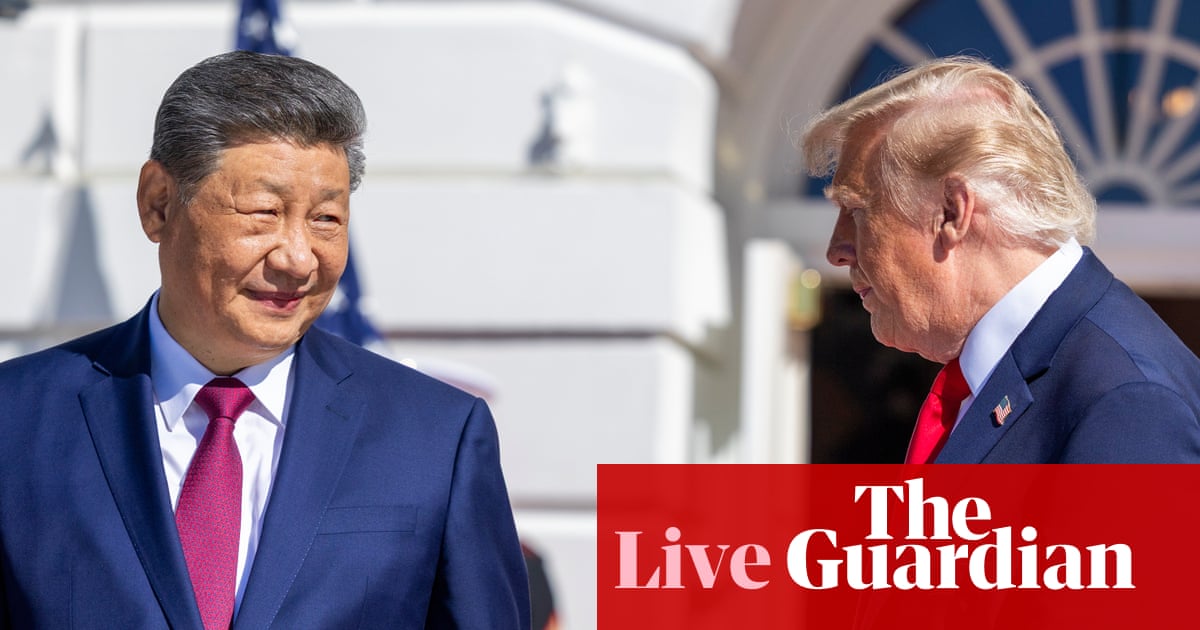
President Donald Trump and Chinese President Xi Jinping closed a three-day state visit in Washington on Friday, capping a summit defined by ceremony, warm personal exchanges and a single firm commitment: that the two leaders will meet again. According to The Hill, the pair pledged to meet at least two more times this year, with Trump confirming future sessions in China and Florida as Xi departed the United States. Beyond that, the high-stakes disputes that have defined the relationship — trade, artificial intelligence regulation, the war in Iran and other long-term frictions — largely fell to the background, leaving the visit long on pageantry and short on concrete breakthroughs.
Main Story
The summit unfolded over three days in Washington, beginning with an arrival that broke with decades of precedent. Trump greeted Xi at Joint Base Andrews on Wednesday, rolling out the red carpet for a Chinese leader in a manner that The Guardian noted departed from long-standing practice. From there, the visit moved through a series of set-piece events: a tour of America's founding documents, tea between the two presidents, and a White House meeting on Thursday that The Hill reported touched on trade, artificial intelligence and the war in Iran.
By Friday, Xi was departing the United States after what The Guardian described as his first official state visit since the end of the Obama administration. The Washington Post reported that the two presidents praised their relationship over tea and viewed the founding documents, but that few apparent breakthroughs emerged on the issues dividing their countries. The Hill reported that the pledge to meet at least two more times this year was one of the few solid commitments announced during the meetings.
The Guardian was blunter in its assessment, describing the second round of talks between the two presidents this year as having given up entirely on the idea of breakthroughs. It characterized the event as a celebration of what it called diplotainment rather than diplomacy, where pomp prevailed over progress. Among the more tangible outcomes it cited was the news that two giant pandas would soon be sent from China to the Atlanta zoo.
NPR framed the summit around a simple question: what did we learn beyond the pageantry? The answer, based on the reporting, was limited. The visit produced warm imagery and a scheduling commitment, but the substantive agenda items — trade negotiations, artificial intelligence regulation and the Iran war — were discussed without announced resolutions.
Why It Matters
The Washington summit mattered less for what it produced than for what it signaled about how the Trump administration is approaching China. The Washington Post reported that Trump embraced Xi as a peer, testing a new approach to the relationship. That framing suggests a deliberate strategy of personal engagement and high-profile hospitality, rather than the more confrontational posture that has often characterized US-China dealings in recent years.
But the absence of concrete outcomes raises questions about whether warmth at the top translates into movement on the issues that actually divide the two powers. Trade remains a persistent source of friction. Artificial intelligence regulation is an emerging frontier where both countries have competing interests and few shared rules. The war in Iran adds another layer of geopolitical complexity, with The Guardian reporting that the two presidents discussed it during the visit.
The summit also carried domestic political weight. The Hill reported that some GOP lawmakers bristled at the lavish treatment China's president received while the nation grapples with economic pressures. That tension — between diplomatic spectacle and voter concerns about affordability and the economy — is likely to persist as the midterm elections approach.
Political Context
The visit took place against a backdrop of a faltering United Nations General Assembly in New York. The New York Times reported that the US-China summit offered a sharp contrast with the action at the gridlocked UN, with Xi effectively snubbing the troubled gathering to spend time with Trump instead. That juxtaposition was not lost on observers: while the multilateral body struggled to produce results, the bilateral meeting commanded global attention.
For Trump, the summit represented an opportunity to project statesmanship and to test whether personal rapport with Xi can yield diplomatic dividends. For Xi, the visit offered a stage to demonstrate China's standing on the world stage and to engage directly with the US president outside the constraints of a multilateral forum.
The Guardian noted that the first round of talks between the two leaders this year, held in Beijing in May, was described as a stalemate summit. The second round, by that measure, seemed to lower expectations further. The Hill reported that the Washington meeting saw other high-stakes issues fall to the background, including negotiations over artificial intelligence regulation and long-term trade questions.
What Officials and Groups Are Saying
Trump confirmed that future meetings with Xi would take place in China and Florida, according to The Guardian. That commitment, announced as Xi departed Washington, was among the few forward-looking outcomes of the visit.
The Hill reported that the pledge to meet at least two more times this year was one of the few solid commitments announced. The Washington Post reported that the presidents praised their relationship and viewed America's founding documents, but that few apparent breakthroughs emerged on the issues dividing their countries.
The Guardian described the event as a celebration of diplotainment rather than diplomacy, where pomp prevailed over progress. It also noted that one of the main outcomes was the news that two giant pandas would soon be sent from China to the Atlanta zoo.
NPR posed the question of what was learned beyond the pageantry, reflecting a broader media assessment that the summit's value lay more in symbolism than in substance. The New York Times highlighted the contrast between the summit and the UN General Assembly, noting that Xi's decision to prioritize Trump over the multilateral gathering drowned out what was supposed to be a big week for the United Nations.
The Hill also reported that some GOP lawmakers bristled at the lavish treatment China's president received while the nation grapples with economic pressures. That domestic criticism underscores the political risks of a summit that prioritized warmth over tangible wins.
Timeline
- May 2026: Trump and Xi meet in Beijing in what The Guardian describes as the stalemate summit.
- Wednesday, Sept. 23, 2026: Trump breaks with decades of precedent to greet Xi at Joint Base Andrews, rolling out the red carpet for the Chinese leader's arrival.
- Thursday, Sept. 24, 2026: The leaders meet at the White House, touching on trade, artificial intelligence and the war in Iran, according to The Hill.
- Friday, Sept. 25, 2026: Xi departs the United States after his first official state visit since the end of the Obama administration. Trump confirms future meetings in China and Florida.
What Was Discussed — and What Was Not Resolved
The White House meeting on Thursday covered a broad agenda. The Hill reported that trade, artificial intelligence and the war in Iran were all on the table. But the reporting suggests that discussion did not translate into agreement. The Hill noted that negotiations over artificial intelligence regulation and long-term trade questions fell to the background.
Trade has been a central fault line in the US-China relationship, and the summit did not appear to produce a breakthrough on that front. Artificial intelligence regulation is an emerging area where both countries are still developing their approaches, and the lack of a joint framework leaves the field open to continued competition. The war in Iran adds a security dimension that complicates the bilateral relationship further.
The Guardian's characterization of the summit as one where pomp prevailed over progress captures the prevailing media assessment. The Washington Post's report that few apparent breakthroughs emerged reinforces that view. And NPR's question about what was learned beyond the pageantry suggests that the substantive takeaways remain elusive.
The Panda Factor and Other Tangible Outcomes
Among the few concrete developments to emerge from the summit was the news that two giant pandas would soon be sent from China to the Atlanta zoo, according to The Guardian. Panda diplomacy has long been a symbol of US-China relations, and the announcement provided a tangible, if modest, outcome from the visit.
The other firm commitment was the pledge to meet again. The Hill reported that Trump and Xi pledged to meet at least two more times this year, and The Guardian reported that Trump confirmed future meetings in China and Florida. That schedule suggests that the personal engagement strategy will continue, even if the results remain uncertain.
Domestic Reaction and Political Risk
The summit's lavish treatment of Xi did not sit well with all corners of Washington. The Hill reported that some GOP lawmakers bristled at the treatment China's president received while the nation grapples with economic pressures. That criticism reflects a broader tension between the administration's diplomatic approach and the domestic political climate, where affordability and economic squeeze are pressing concerns.
With midterm elections on the horizon, the political calculus of a warm summit with China could cut both ways. Supporters may see it as a sign of Trump's ability to manage great-power relations. Critics may see it as a distraction from economic anxieties at home. The Hill's reporting that the Iran war and economic squeeze weigh on the GOP suggests that the summit's aftereffects will play out in a charged political environment.
Frequently Asked Questions
What was the main outcome of the Trump-Xi summit?
The most concrete outcome was a pledge to meet at least two more times this year, with Trump confirming future meetings in China and Florida, according to The Guardian and The Hill. The summit also produced news that two giant pandas would be sent from China to the Atlanta zoo.
Did the leaders reach any agreements on trade or AI?
Based on the reporting, no clear breakthroughs were announced on trade or artificial intelligence regulation. The Hill reported that negotiations over AI regulation and long-term trade questions fell to the background, and The Washington Post reported few apparent breakthroughs on the issues dividing the two countries.
Why did Xi skip the UN General Assembly?
The New York Times reported that Xi snubbed the troubled UN gathering to spend time with Trump, offering a sharp contrast with the gridlocked multilateral body in New York. The summit drowned out what was supposed to be a big week for the United Nations.
How long was the summit and where did it take place?
The summit was a three-day state visit in Washington, D.C., running from Wednesday through Friday. It included an arrival at Joint Base Andrews, a White House meeting on Thursday and Xi's departure on Friday.
What did critics say about the summit?
The Guardian described the event as diplotainment rather than diplomacy, where pomp prevailed over progress. The Hill reported that some GOP lawmakers bristled at the lavish treatment China's president received amid domestic economic pressures.
What Happens Next
Trump and Xi are set to meet again, with future sessions planned in China and Florida, according to The Guardian. That schedule ensures the personal engagement strategy will continue, even as the substantive disputes remain unresolved. The coming months will test whether warmth at the top can translate into movement on trade, artificial intelligence regulation and the war in Iran — or whether the pattern of pageantry over progress will repeat.
For readers, the story to watch is not the next photo opportunity but whether the follow-up meetings produce anything more concrete than the panda announcement and the pledge to meet again. The domestic political dimension also bears watching, as GOP lawmakers' discomfort with the summit's optics could shape how the administration approaches the next round. The US-China relationship remains one of the most consequential in the world, and the Washington summit, for all its ceremony, left the hardest questions unanswered.
More from the Foreign Policy desk
 New
Witkoff's Praise of Putin as Humanitarian Sparks GOP Backlash
Special envoy Witkoff called Putin a humanitarian after freeing an American. Lawmakers push back hard, and Trump links the…
 New
Trump's Putin Summit Drawbacks: GOP Pushback on Ukraine Diplomacy
Trump's push for a trilateral US-Russia-China summit is drawing sharp opposition from Republican lawmakers and complicating…
 New
Trump Waives Russia Sanctions, Igniting Bipartisan Backlash
President Trump's late-night executive order suspending Russia sanctions drew sharp criticism from GOP lawmakers and deepened…
 New
Senators Demand Pentagon Probe Into Ukraine Starshield Cutoff
Bipartisan senators call for a Pentagon inspector general investigation into whether the Trump administration restricted…