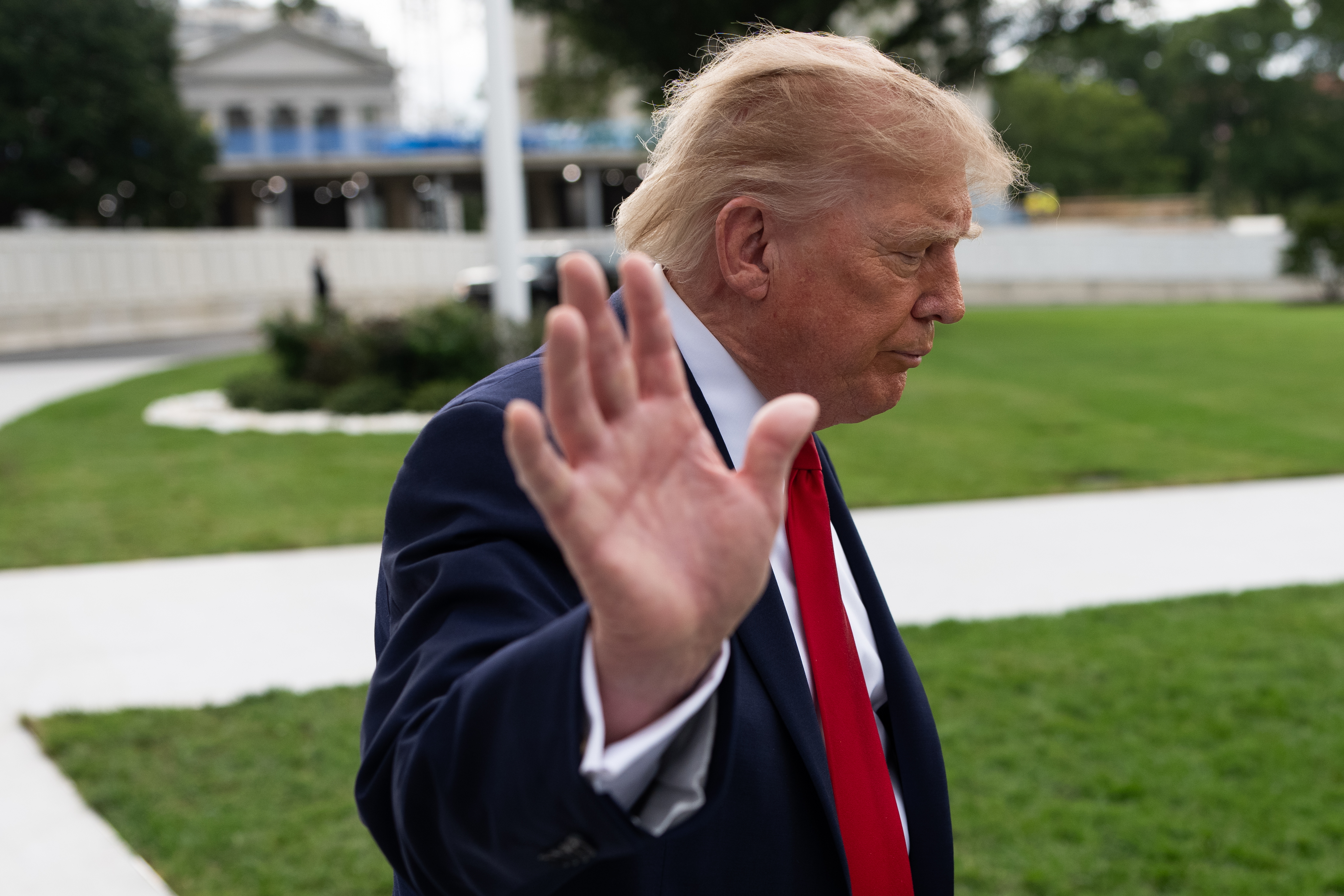
President Trump has formally rejected Iran's latest proposal to reopen the Strait of Hormuz to commercial shipping, calling the plan not acceptable and dismissing Tehran's overture as a negotiation tactic driven by economic pressure from an American naval blockade. The refusal, announced at the White House on September 26, 2026, deepens an already tense standoff over one of the world's most vital energy corridors and leaves open the question of whether military strikes against Iran will resume after the upcoming midterm elections. The Iranian proposal closely mirrored a memorandum of understanding previously agreed to by the United States and Iran in June, making the rejection all the more significant as a signal of the administration's hardened posture.
The Rejection and Its Immediate Impact
The White House announcement sent a clear message that the Trump administration is not prepared to accept the terms Iran has put forward to restore freedom of navigation through the Strait of Hormuz. Speaking to reporters, Trump emphasized that Tehran's willingness to negotiate stemmed directly from the financial squeeze imposed by the ongoing American naval blockade, suggesting the administration sees continued pressure as the most effective lever. By rejecting a proposal that essentially recycled the June memorandum of understanding, Trump signaled that the United States is seeking more substantial concessions than Iran has been willing to offer.
The Strait of Hormuz sits at the narrow mouth of the Persian Gulf, a maritime passage roughly 21 miles wide at its tightest point through which a substantial share of the world's oil supply flows daily. Any sustained disruption to shipping there has immediate and far-reaching consequences for global energy prices, making the standoff about far more than bilateral US-Iran tensions. Markets reacted to the news with heightened uncertainty, as traders weighed the risk of a further escalation that could physically interrupt oil transit.
Why the Strait of Hormuz Matters
The strategic importance of the Strait of Hormuz cannot be overstated. It is one of a handful of maritime chokepoints worldwide through which the majority of globally traded oil must pass, and any credible threat to its operation sends immediate tremors through energy markets. Iran has previously threatened to close the strait in moments of heightened confrontation with the West, and the current standoff represents the most serious test of that threat in years.
Trump's rejection of the Iranian proposal effectively keeps the strait in a state of contested access, with the United States maintaining its naval posture and Iran unable to secure the economic relief that reopened shipping would bring. The blockade's impact on Iran's economy appears to be a central factor in Tehran's willingness to negotiate, but the administration's insistence on terms beyond what Iran has offered suggests the impasse will persist.
Political Context and the Midterm Question
The timing of the rejection carries significant domestic political weight. With midterm elections approaching, any decision to restart large-scale military strikes against Iran would be deeply polarizing, and Trump's refusal to commit either way on the question reflects the delicate political calculus involved. The president's deliberate ambiguity leaves multiple scenarios open while avoiding a definitive statement that could shape the electoral landscape.
This standoff unfolds against the backdrop of an ongoing military campaign involving the United States and Israel targeting Iran, a conflict that has already reshaped regional alliances and drawn in neighboring states. The June memorandum of understanding had represented a tentative diplomatic opening, and its effective resurrection in Iran's latest proposal suggests Tehran had hoped to build on that framework. The rejection resets the diplomatic clock and raises questions about what, if anything, Iran might offer to secure a deal acceptable to the Trump administration.
Regional Fallout: Iraq Caught Between Powers
While the Strait of Hormuz standoff dominates headlines, the broader US pressure campaign against Iran is producing significant ripple effects across the region, most acutely in Iraq. Four Iraqi airports, including Baghdad International Airport, suspended all flights to and from Iran following new US aviation sanctions targeting any global company doing business with Iranian airlines. The sanctions have severed a critical air link between the two neighboring Shia-majority countries and created immediate humanitarian and logistical challenges.
Prime Minister Ali al-Zaidi's government has entered direct talks with Washington seeking exemptions for Iraqi airports, arguing that flights should resume on humanitarian grounds covering medical treatment, educational travel, religious visits, and civilian interests. Baghdad's statement warned that the continuation of crises further complicates an already volatile regional situation and called on all parties to pursue dialogue and negotiations. The Iraqi government's position reflects the difficult balancing act facing a state caught between its powerful Iranian neighbor and its strategic relationship with the United States.
The flight suspensions have already triggered domestic unrest in Iraq. Demonstrators gathered in Baghdad to oppose the halt, in a protest organized by Iran-allied Iraqi militias. In Najaf, scholars and students from the Hawza — the city's ancient and influential Shia seminary — held a vigil condemning the suspension of Iranian flights. The seminary's Scholarly Assembly issued a statement urging the government to act when the peoples of the region most need to strengthen bonds of brotherhood, reflecting the deep social and religious ties that the aviation sanctions have disrupted.
With flights halted, passengers who previously relied on direct air connections between Iraq and Iran have been forced onto land journeys of at least 12 hours, a significant burden for pilgrims, patients, and families. Najaf in particular serves as a destination for Iranian Shia pilgrims visiting holy sites, as well as a departure point for Iraqis traveling to Iran's religious cities, making the flight suspension especially consequential for religious tourism.
What Happens Next
The rejection of Iran's Strait of Hormuz proposal leaves the standoff in an unresolved state with several possible trajectories. The Trump administration could maintain the naval blockade and wait for Iran to return with more favorable terms, a posture that risks prolonging economic disruption and energy market volatility. Alternatively, the president could follow through on the implied threat of resumed military strikes after the midterm elections, a move that would dramatically escalate the conflict and draw in regional and global powers.
Iran, for its part, faces mounting economic pressure from the blockade and sanctions, but its options for meaningful negotiation are constrained by domestic political considerations and the military campaign already underway. The June memorandum of understanding remains a reference point for what a potential deal might look like, but the gap between that framework and what the Trump administration now appears to want is substantial. Diplomatic channels, to the extent they remain open, will be tested in the weeks ahead as both sides assess their leverage heading into a politically sensitive period in Washington.
Frequently Asked Questions
What is the Strait of Hormuz?
The Strait of Hormuz is a narrow maritime passage at the entrance to the Persian Gulf, approximately 21 miles wide at its narrowest point. It is one of the world's most strategically important waterways because a substantial share of global oil supply passes through it daily, making it a critical chokepoint for international energy markets.
Why did Trump reject Iran's proposal?
Trump stated the proposal was not acceptable and argued that Iran was motivated to negotiate because the American naval blockade was cutting off the country's revenue. The Iranian plan closely resembled a June 2026 memorandum of understanding between the United States and Iran, suggesting the administration is seeking terms beyond what that earlier framework provided.
Could military strikes resume after the midterm elections?
Trump declined to provide a definitive answer when asked whether military strikes against Iran would resume after the midterm elections, leaving the question deliberately open. His refusal to commit reflects the political sensitivity of any military escalation during an election period.
How is Iraq affected by the broader US-Iran confrontation?
Iraq is caught between its strategic relationship with the United States and its deep economic, religious, and social ties to Iran. Four Iraqi airports suspended Iranian flights following US aviation sanctions, disrupting travel for pilgrims, medical patients, and families. Baghdad is seeking US exemptions on humanitarian grounds while domestic protests from Iran-allied groups and religious leaders have pressured the government over the flight suspensions.
What was the June 2026 memorandum of understanding?
The June 2026 memorandum of understanding was a prior agreement reached between the United States and Iran that addressed aspects of the Strait of Hormuz dispute. Iran's latest proposal closely mirrored that earlier framework, but the Trump administration found the recycled terms unacceptable, indicating a shift in US negotiating position since June.
What Happens Next
The Strait of Hormuz standoff remains unresolved heading into a period of significant political sensitivity in Washington. Trump's rejection of Iran's proposal keeps the naval blockade in place and leaves the strait in a state of contested access, with no clear diplomatic off-ramp in sight. The president's refusal to commit on post-midterm military strikes ensures that uncertainty will continue to hang over the situation, keeping global energy markets on edge and regional allies like Iraq navigating an increasingly complex pressure environment. The June memorandum of understanding framework may yet serve as a basis for future talks, but the gap between what Iran has offered and what the Trump administration appears to want suggests that any new diplomatic effort will require significant movement from both sides. Observers will be watching closely for signs of whether Iran returns with revised terms, whether the blockade is adjusted, or whether the military dimension of the conflict escalates in the weeks ahead.
More from the Foreign Policy desk
 New
Witkoff's Praise of Putin as Humanitarian Sparks GOP Backlash
Special envoy Witkoff called Putin a humanitarian after freeing an American. Lawmakers push back hard, and Trump links the…
 New
Trump's Putin Summit Drawbacks: GOP Pushback on Ukraine Diplomacy
Trump's push for a trilateral US-Russia-China summit is drawing sharp opposition from Republican lawmakers and complicating…
 New
Trump Waives Russia Sanctions, Igniting Bipartisan Backlash
President Trump's late-night executive order suspending Russia sanctions drew sharp criticism from GOP lawmakers and deepened…
 New
Senators Demand Pentagon Probe Into Ukraine Starshield Cutoff
Bipartisan senators call for a Pentagon inspector general investigation into whether the Trump administration restricted…