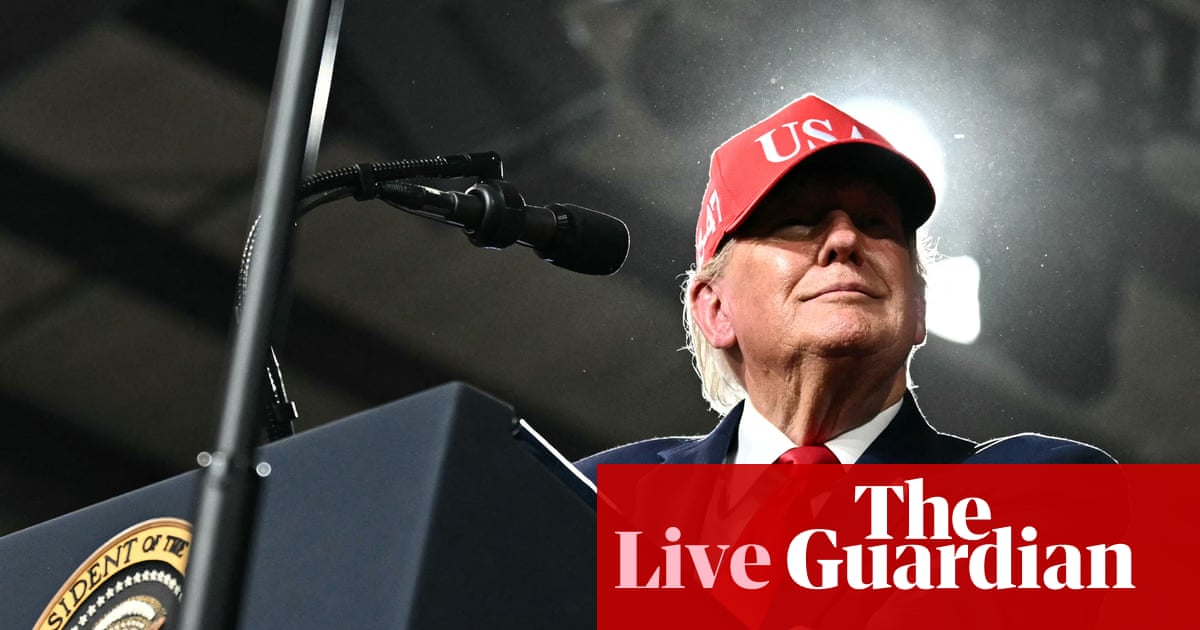
President Donald Trump is running a high-volume closing strategy for the 2026 midterms, mixing campaign rallies, battleground-state policy rollouts and attention-grabbing foreign policy moves on Iran and Ukraine's access to the military version of Starlink. The approach, described by The Hill as a flood-the-zone strategy, is designed to boost Republican candidates in tough races, but it is also drowning out the state-specific economic messaging that GOP strategists hoped would define the final stretch. With Democrats leading in the polls and economic anxiety weighing on key voting groups, Republicans are scrambling for wins as the election approaches.
Main Story
Trump's closing argument for the midterms is less a single message than a barrage. In the span of days, he has claimed the Iran war will end very soon, suggested Ukraine's attacks on Russian refineries are responsible for rising fuel prices, and touted a South Korean liquefied natural gas investment during a campaign stop. The Hill reported that the president is seeking to boost Republican candidates facing tough elections by rolling out initiatives meant to foster goodwill with voters in battleground states, but that he risks overshadowing those announcements with his focus on unrelated issues.
The result is a campaign that is loud, fast and difficult for down-ballot Republicans to control. Rather than a disciplined, state-by-state economic pitch, the president's schedule has produced a stream of headlines that force GOP candidates to react to whatever Trump said last. The Hill described the dynamic as a flood-the-zone strategy that drowns out state-specific midterm messaging, leaving candidates to compete for attention against the president's own megaphone.
That tension is sharpest on foreign policy. Ukraine's sudden and unexplained loss of full access to the military version of Starlink has added to friction between Trump and Senate Republicans, according to The Hill. GOP senators are scrambling to find out whether Trump played a role in reducing Ukraine's defensive capabilities. Many of Ukraine's staunchest supporters within the Senate Republican Conference stayed silent on Wednesday, a signal of how politically delicate the issue has become inside the party.
Why It Matters
The midterms are unfolding under a cloud of economic uncertainty and ongoing global conflict, and the president's messaging reflects which anxieties his team believes will decide the election. Trump's renewed focus on Iran suggests that the price of daily goods, and gas at the tank, are having an impact at the polls. By promising that the Iran war will end very soon and that oil prices will drop like a rock, the president is effectively asking voters to judge him on outcomes they can feel at the pump rather than on the details of foreign policy.
At the same time, the Starlink dispute cuts against that economic frame. If Senate Republicans cannot get a clear answer on whether the administration constrained Ukraine's defensive capabilities, the issue risks becoming a loyalty test inside the GOP conference at the worst possible moment. Candidates in competitive races would rather talk about energy investment and tax policy than about whether Washington quietly weakened an ally. The Hill's reporting suggests that uncertainty, not a settled conclusion, is what is driving the Senate's discomfort.
The polling backdrop makes the stakes clearer. A Harris poll for The Guardian found that three in four Americans are now concerned about the potential for a broader economic shock, and that voting groups key to winning the midterms are increasingly disenchanted with the economy. NYT Politics reported that the right wing is scrambling for wins as Democrats lead in the polls. For Republicans, the challenge is not simply persuading undecided voters but re-energizing parts of their own coalition that feel the economy is not working for them.
Political Context
Trump's approach carries a built-in trade-off. A president who dominates the news cycle can lift turnout and enthusiasm among his base, but he can also nationalize races that Republican candidates would prefer to fight on local terms. The Hill noted that the president's focus on unrelated issues risks overshadowing the very initiatives meant to help candidates in battleground states. A South Korean LNG investment announcement, for example, is the kind of tangible economic news that campaigns want to promote. When it lands in the middle of a rally dominated by Iran and Ukraine, its shelf life shrinks.
Senate Republicans face a related dilemma. Staying silent on the Starlink question protects them from a direct confrontation with the White House, but it also leaves them exposed to Democratic attacks that they are not defending Ukraine. Speaking up, meanwhile, invites a public fight with a president whose supporters remain the most reliable Republican voters. The Hill's account of GOP senators scrambling for information, and of Ukraine's strongest Senate supporters staying quiet, captures a conference trying to buy time.
The economic message is where the two parties will ultimately collide. Trump's prediction that oil prices will drop like a rock is a bet that voters will credit him for relief at the pump. Democrats, by contrast, are likely to argue that the administration's foreign policy choices are part of what is driving volatility. The Harris poll for The Guardian suggests that concern about a broader economic shock is already widespread, which means the debate over who is responsible for prices may matter more than any single policy rollout.
What Officials and Groups Are Saying
Trump has framed the Iran conflict as one he controls, telling reporters on Wednesday evening that the war will end very soon and that it will end as soon as he wants it to. He also stated that Iran will never have a nuclear weapon and predicted oil prices would drop sharply. The comments, reported by The Guardian, came as voters consider their options ahead of midterm elections shaped by economic uncertainty and global conflict.
On Ukraine, The Hill reported that the loss of full Starlink access for Ukraine's military has become the latest flash point between Trump and Senate Republicans. GOP senators are trying to establish whether the president played a role in reducing Ukraine's defensive capabilities. Many of Ukraine's staunchest supporters in the Senate Republican Conference stayed silent on Wednesday, according to The Hill, rather than publicly press the administration.
NYT Politics reported that Republicans are scrambling for wins as Democrats lead in the polls. The Hill reported that Trump is rolling out initiatives aimed at battleground-state voters while his focus on other issues risks overshadowing them. The Harris poll for The Guardian found that three in four Americans are concerned about the potential for a broader economic shock, with key voting groups increasingly disenchanted with the economy.
Timeline
- Recent weeks: Trump attempts to shift focus toward Ukraine and suggests its attacks on Russian refineries are responsible for rising fuel prices, according to The Guardian.
- Tuesday: Trump touts a South Korean liquefied natural gas investment during a campaign stop, per The Hill.
- Wednesday: Many of Ukraine's staunchest Senate Republican supporters stay silent as questions mount over Ukraine's loss of full Starlink access, according to The Hill.
- Wednesday evening: Trump tells reporters the Iran war will end very soon, that Iran will never have a nuclear weapon and that oil prices will drop sharply, per The Guardian.
- Thursday: The Guardian publishes its live coverage, noting the midterms are taking place under economic uncertainty and ongoing global conflict.
What to Watch
Three questions will shape the final weeks. First, whether Senate Republicans force a public answer on Starlink or continue to avoid the issue. Second, whether Trump's Iran messaging moves gas prices or merely moves headlines. Third, whether the flood-the-zone approach produces enough goodwill in battleground states to offset the polling deficit Democrats currently enjoy. The answers will not arrive all at once, but each will be visible in the president's schedule, the Senate's statements and the price boards at gas stations.
Frequently Asked Questions
What did Trump say about the Iran war?
Trump told reporters on Wednesday evening that the Iran war will end very soon, that it will end as soon as he wants it to, that Iran will never have a nuclear weapon and that oil prices will drop sharply, according to The Guardian.
What is the Starlink controversy about?
Ukraine suddenly and without explanation lost full access to the military version of Starlink. The Hill reported that the loss has become a flash point between Trump and Senate Republicans, who are scrambling to find out whether the president played a role in reducing Ukraine's defensive capabilities.
Why is Trump focusing on Iran and Ukraine before the midterms?
The Guardian reported that Trump's renewed messaging on Iran suggests the price of daily goods and gas are having an impact at the polls. The midterms are taking place under economic uncertainty and ongoing global conflict.
What does the polling show?
A Harris poll for The Guardian found three in four Americans are concerned about the potential for a broader economic shock, and that key midterm voting groups are increasingly disenchanted with the economy. NYT Politics reported that Democrats lead in the polls as Republicans scramble for wins.
What is the flood-the-zone strategy?
The Hill described Trump's approach as a flood-the-zone strategy in which the president rolls out key initiatives for battleground states while his focus on unrelated issues risks overshadowing those announcements and drowning out state-specific midterm messaging.
What Happens Next
Trump's closing strategy will continue to test whether volume can substitute for a disciplined message. The president has made clear he intends to keep the Iran war, oil prices and Ukraine in the conversation, even as Republican candidates try to keep their races focused on local economic concerns. Senate Republicans, meanwhile, still lack a clear answer on Starlink, and their silence may not hold if the issue gains traction with voters.
The next few weeks will reveal whether the flood-the-zone approach lifts GOP candidates or buries their own messaging. With Democrats leading in the polls and economic anxiety running high, every rally, rollout and foreign policy remark now carries electoral weight. Readers should watch the Senate's next move on Ukraine, any shift in gas prices, and whether battleground-state Republicans begin to distance themselves from the president's more unpredictable headlines.
More from the US Elections desk
 New
Judge Blocks Trump Bid to Segregate 20,000 Ballots
A federal judge rejected the Trump administration’s request to segregate roughly 20,000 California mail ballots ahead of the…
 New
Obama Back on Trail in Ohio, Michigan for 2026 Midterms
Barack Obama storms back onto the campaign trail in Cleveland and Detroit, ripping Trump and Ramaswamy as Democrats fight for…
 New
Trump Backs Ramaswamy Ad Featuring Acton's Estranged Mother
President Trump urged Vivek Ramaswamy to keep running a controversial ad featuring Amy Acton's estranged mother, deepening a…
 New
Final Michigan Senate Debate: El-Sayed, Rogers Clash on Trust
Abdul El-Sayed and Mike Rogers fought over who voters can trust in the final Michigan Senate debate. The toss-up race could…