
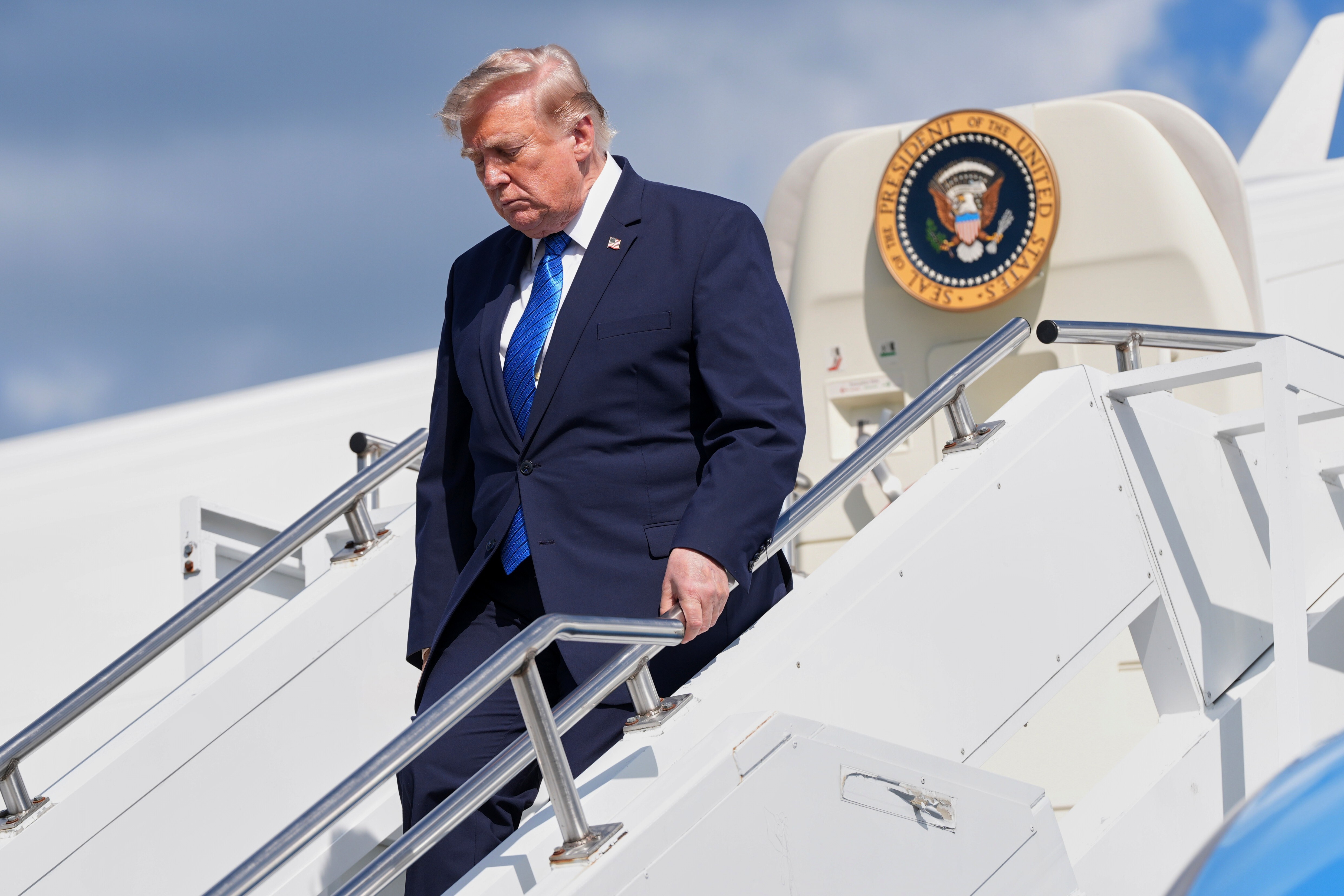
President Donald Trump on Wednesday attended the dignified transfer of the remains of four U.S. service members killed in Iranian attacks this month, as hostilities between the United States and Iran escalated following the collapse of a ceasefire. The ceremony took place at Dover Air Force Base in Delaware, where Trump was joined by Defense Secretary Pete Hegseth, Army Secretary Dan Driscoll, and Gen. Dan Caine, chair of the Joint Chiefs of Staff, according to NBC News and CBS News.
Main Story
President Donald Trump on Wednesday attended the dignified transfer of the remains of four U.S. service members killed in Iranian attacks this month, as hostilities between the United States and Iran escalated following the collapse of a ceasefire. The ceremony took place at Dover Air Force Base in Delaware, where Trump was joined by Defense Secretary Pete Hegseth, Army Secretary Dan Driscoll, and Gen. Dan Caine, chair of the Joint Chiefs of Staff, according to NBC News and The Hill.
The four service members were identified as 28-year-old Angel S. Rampersad of New York, 30-year-old Michael Emmanuel Swinton of North Carolina, 25-year-old Tyler James Feehan of Hawaii, and 19-year-old Isabella Gonzales of Texas, according to NBC News. Feehan and Gonzales were killed in action during strikes on Muwaffaq Salti Air Base in Jordan, the Pentagon confirmed. Rampersad had initially been listed as missing in action, but U.S. Central Command updated her status to whereabouts unknown, and she is believed to have been killed in the same attack. Swinton, a father of two, was killed at Erbil Air Base in northern Iraq during a controlled detonation of an Iranian drone, according to CBS News.
Dignified transfers are among the most solemn occasions for presidents, who often attend to pay respects to troops killed in conflicts overseen by themselves as commander in chief. Trump has attended two prior dignified transfers since the war began in February, but this was his first since he declared on July 8 that the ceasefire was over, NBC News reported. The White House said the president met with each of the soldiers' families, according to CBS News.
The event marked the latest impact of a war that has drawn criticism from lawmakers on both sides of the aisle who question the administration's strategy in the months-long conflict. The hostilities, which were temporarily paused after the two sides agreed to a peace plan that quickly fell apart, have thrown the region into chaos, leaving at least 18 Americans dead, costing at least $37.5 billion, and inflating the price of oil, according to NBC News.
Why It Matters
The dignified transfer underscores the human cost of the U.S.-Iran war, which has become increasingly unpopular. A Washington Post-Ipsos poll found that only 28% of Americans think the Iran war is worth fighting, while 68% believe it is not, according to The Guardian. The war has also strained the U.S. military, with troops far from Iran's borders facing deadly risks. The latest combat deaths show that risk has shifted to troops tasked with defending bases from incoming strikes, according to The Washington Post.
Political Context
The war has become a political liability for Trump and Republicans ahead of the midterm elections, which are less than four months away. Republicans in the House and Senate are increasingly fearful of losing their jobs, hampered by a deeply unpopular president and an even less popular war, The Guardian reported. Even Trump's base is beginning to turn against the conflict. Asked on Tuesday if Iran is trying to affect the midterm elections by threatening the Strait of Hormuz, Trump was dismissive, saying the election would not have any impact on his decisions, according to The Guardian.
What Officials and Groups Are Saying
Trump told reporters before attending the transfer that the service members were great heroes and that the United States cannot let Iran have a nuclear weapon, according to CBS News. He described attending the dignified transfer as one of the hardest things to do as president but said it had to be done. The administration has vigorously defended its handling of the war, arguing that the conflict is necessary to prevent Iran from obtaining a nuclear weapon, NBC News reported.
Timeline
- February 2026: U.S.-Iran war begins. Trump attends first dignified transfers.
- July 8, 2026: Trump declares ceasefire over after a peace plan falls apart.
- July 2026: Four U.S. service members are killed in Iranian attacks at bases in Jordan and Iraq.
- July 22, 2026: Trump attends dignified transfer at Dover Air Force Base.
Frequently Asked Questions
What is a dignified transfer?
A dignified transfer is a solemn ceremony at Dover Air Force Base where the remains of fallen service members are returned to U.S. soil. Presidents often attend to honor the troops.
Who were the four service members killed?
They were Lt. Tyler James Feehan, 25, of Hawaii; Pvt. Isabella Gonzales, 19, of Texas; Sgt. Angel S. Rampersad, 28, of New York; and Sgt. Michael Emmanuel Swinton, 30, of North Carolina, according to CBS News.
How many Americans have died in the Iran war?
At least 18 Americans have been killed, according to NBC News.
How much has the war cost?
The war has cost at least $37.5 billion, according to NBC News.
Is the war popular?
No. A Washington Post-Ipsos poll found that only 28% of Americans think the war is worth fighting, according to The Guardian.
What Happens Next
The war with Iran shows no signs of de-escalation. The Trump administration continues to conduct strikes and defend U.S. bases, while the human and financial costs mount. With midterm elections approaching, the conflict's unpopularity could have significant political consequences for Republicans. The families of the fallen service members, meanwhile, mourn their losses as the nation grapples with the ongoing toll of the war.
More from the Foreign Policy desk
 New
New
Trump Cancels Iran Strikes, Cites Agreed Deal Framework
President Trump cancels planned strikes on Iran, citing an agreed framework for a deal, amid Saudi pressure and Tehran's warnings.
 New
New
US, Israel Prepare Strikes on Iran Energy Targets
US and Israel are preparing to strike energy-related targets in Iran, sources say, as Tehran warns of retaliation and regional…
 New
New
US Plans Renewed Strikes on Iran as Tehran Vows Response
US reportedly plans renewed strikes on Iran as soon as this weekend, with Tehran vowing to respond, amid tensions over…
 New
New
Trump Approval Hits New Low Amid Iran War, Gas Prices
President Trump's approval rating falls to a second-term low as the Iran war drags on and gas prices surge, with analysts…