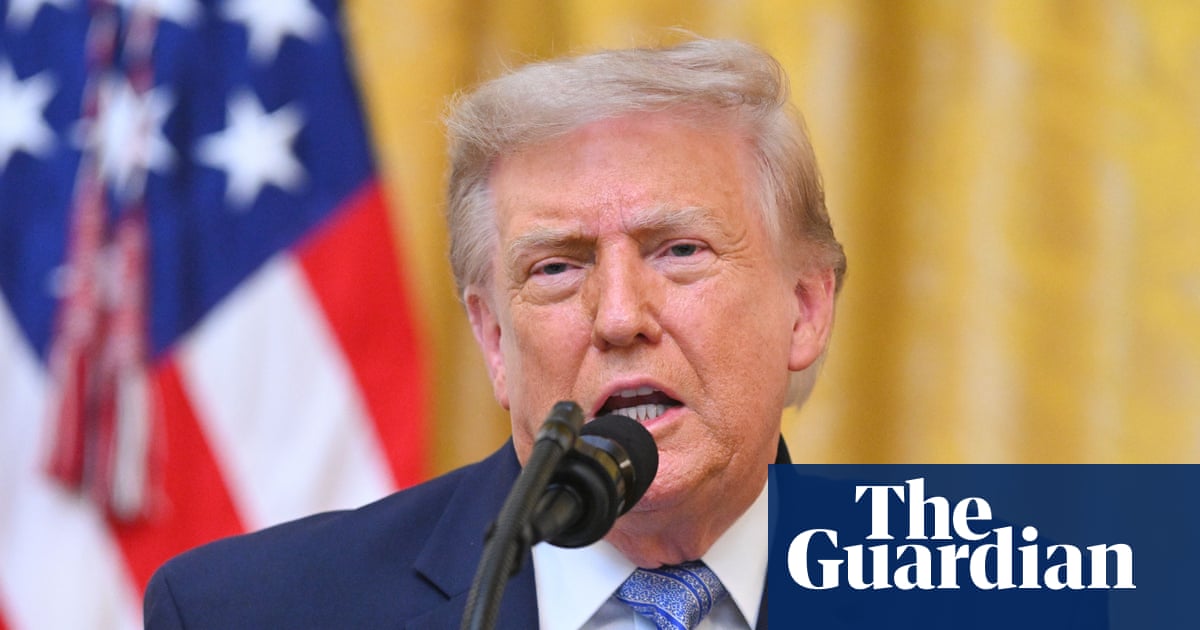
President Donald Trump delivered a primetime televised address on Thursday evening from the East Room of the White House, accusing China of interfering in the 2020 presidential election and alleging widespread vulnerabilities in the U.S. election system. The 25-minute speech, which the president had hyped in advance, marked his most direct effort yet to use the authority of his office to cast doubt on the integrity of American elections, according to The Guardian. Trump claimed that China had illicitly acquired 220 million U.S. voter files and that the nation's electoral system falls "catastrophically short" of standards of fairness and trust. The White House simultaneously released a trove of newly declassified documents on election security, though a senior administration official acknowledged that none of the material alleged that any votes were switched or voting machines hacked, as reported by CBS News. Democrats and election experts swiftly condemned the address as an attempt to sow confusion and undermine confidence in the upcoming November midterm elections.
Main Story
President Trump used his primetime address to level a series of allegations against China, claiming that Beijing had carried out what he described as the largest compromise of election data in history. According to the president, China illicitly acquired 220 million U.S. voter files, including names, addresses, and party preferences, affecting 18 states. He asserted that the data was "bought, stolen or hacked by China," as reported by Al Jazeera. However, Trump did not present evidence that China had used the information to alter voting systems or influence election outcomes, according to BBC News.
The president also alleged that voting machines and ballot-counting systems were "extremely exposed to attack," pointing to declassified intelligence about a plot involving the company Smartmatic in Venezuela. However, CBS News reported that Smartmatic's technology is not used in the United States except in Los Angeles County, and that the company has said it no longer operates in Venezuela. Election experts emphasized that U.S. voting machines are not connected to the internet, are closely monitored, and are backed up by paper ballots that can be audited.
The White House released a trove of declassified documents in conjunction with the speech. In a briefing with reporters hours before the address, a White House official acknowledged that none of the newly released information would allege that any votes were switched or voting machines hacked, as noted by CBS News. The documents included an FBI memo about a purported scheme by China to create fake IDs, but that memo had been viewed skeptically by intelligence agents, according to The New York Times.
Why It Matters
The address came three months before the November midterm elections, which will determine control of Congress for the remainder of Trump's presidency. Critics warned that the speech was an attempt to sow confusion and lay the groundwork to challenge the results if Republicans face losses, as reported by The Guardian. Trump's claims directly contradicted previous U.S. intelligence assessments. A 2021 report by the National Intelligence Council stated with high confidence that China did not deploy interference efforts in the 2020 election, according to BBC News. The report noted that China likely did not view either outcome as advantageous enough to risk blowback.
Trump's speech also served to promote the SAVE America Act, a suite of controversial proposed election law changes that would require proof of citizenship to register to vote. The legislation remains stuck in limbo, with some Senate Republicans skeptical, according to CBS News. Trump's allies in the GOP caucus largely praised the speech and echoed his calls to pass the bill.
Political Context
Democrats reacted with alarm to the president's address. Senate Majority Leader Chuck Schumer posted on social media that "in America, voters choose their leaders, not the other way around," and pledged to fight against any obstruction of voting rights, as reported by BBC News. Representative Jim McGovern, the top Democrat on the House Rules Committee, issued a statement calling the claims "bull----," according to The Hill.
Election experts also pushed back. David Becker, executive director of the Center for Election Innovation and Research, argued that little groundbreaking information was revealed in the speech. He noted that the administration had been in control of the federal government for 18 months and had redirected taxpayer resources to uncover evidence of voter fraud, yet produced only "rehashed, debunked conspiracy theories," as quoted by CBS News.
The Chinese Embassy in Washington denied the allegations, stating that Beijing "has never and will never interfere in the presidential elections," according to BBC News. The speech is expected to further strain U.S.-China relations, as noted by NBC News.
Timeline
- 2020: President Trump loses the presidential election to Joe Biden. Trump and his allies make unsubstantiated claims of widespread voter fraud.
- March 2021: The U.S. intelligence community releases a report concluding with high confidence that China did not interfere in the 2020 election.
- July 16, 2026: Trump delivers a primetime address from the White House, alleging Chinese interference and declassifying documents on election security. Democrats and experts criticize the speech as misleading.
- November 2026: Midterm elections are scheduled, with control of Congress at stake.
Frequently Asked Questions
What did President Trump allege in his speech?
Trump claimed that China interfered in the 2020 election by illicitly acquiring 220 million U.S. voter files and that the U.S. election system is vulnerable to foreign meddling. He also alleged that voting machines are easily compromised.
Did the declassified documents support Trump's claims?
A White House official acknowledged that none of the declassified documents alleged that any votes were switched or voting machines hacked. The documents included an FBI memo viewed skeptically by intelligence agents.
What has the U.S. intelligence community said about Chinese interference?
A 2021 report by the National Intelligence Council stated with high confidence that China did not deploy interference efforts in the 2020 election.
How did Democrats respond to the speech?
Democrats accused Trump of spreading misinformation and attempting to undermine confidence in the upcoming midterm elections. Senate Majority Leader Chuck Schumer pledged to fight against any obstruction of voting rights.
What is the SAVE America Act?
The SAVE America Act is a proposed law that would require proof of citizenship to register to vote. Trump pushed for its passage during his speech, but the legislation remains stalled in Congress.
What Happens Next
President Trump's primetime address has intensified the political debate over election security just months before the midterm elections. Democrats and voting rights advocates are expected to continue challenging the president's claims, while Trump and his allies may use the declassified documents to push for the SAVE America Act and other election-related legislation. The impact on public confidence in the electoral system and on U.S.-China relations remains to be seen. As the midterms approach, the controversy over election integrity is likely to remain a central issue in American politics.
More from the US Elections desk
 New
New
AOC Ties Civil Rights Legacy to November Vote
At the Defend the Vote March on Washington, Alexandria Ocasio-Cortez framed November as a civil-rights turnout test after the…
 Live
Live
Wyoming Senate Primary Results 2026
Unofficial Secretary of State returns show Harriet Hageman leading the open Republican Senate primary and James Byrd leading…
 New
New
Barlow Wins Wyoming GOP Primary, Defeating Trump-Backed Degenfelder
Wyoming state Sen. Eric Barlow, a rancher and veterinarian, has defeated Trump-endorsed Megan Degenfelder in the GOP…
 New
New
Mandela Barnes Drops Out of Wisconsin Governor Race
Former Lt. Gov. Mandela Barnes exits the Democratic primary, citing Francesca Hong's surge, as the race enters its final stretch.