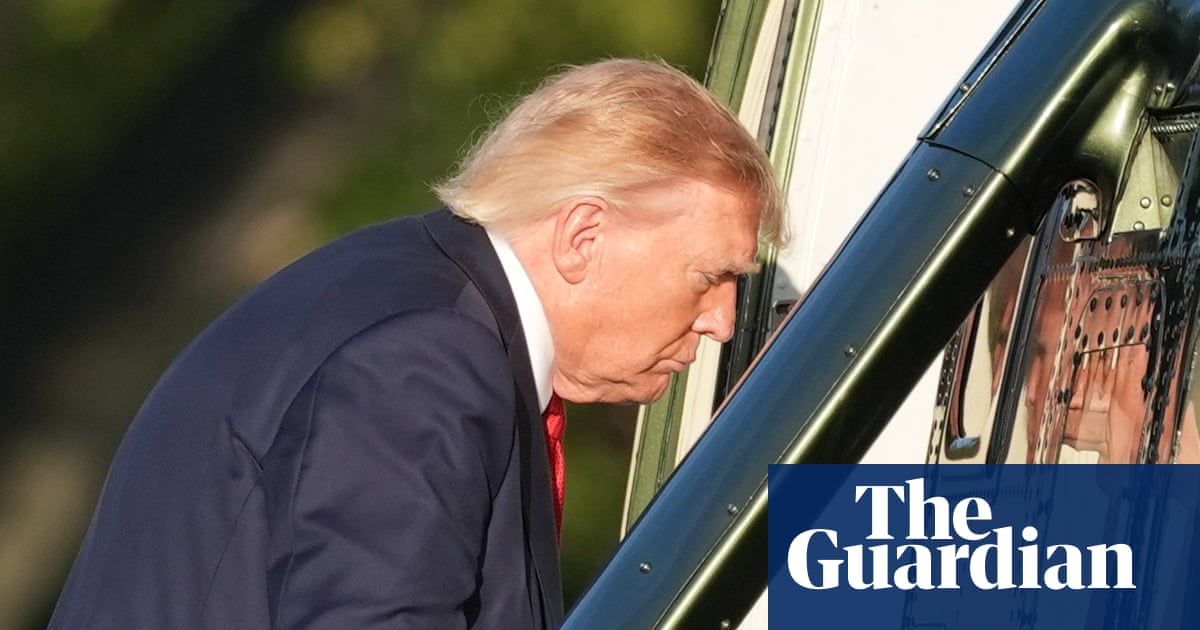
President Donald Trump announced on Saturday that he will create an AI Force and appoint an AI czar to oversee artificial intelligence, while rejecting calls to slow the technology's development and dismissing fears of superintelligence as a hoax. The move, disclosed in a Truth Social post, comes after a week of warnings from AI researchers and industry leaders that advanced systems could spiral out of human control. Trump offered almost no details about how either the force or the czar would operate, but framed the initiative as a way to monitor the industry without hindering its growth.
Main Story
President Donald Trump said on Saturday that he would appoint an artificial intelligence czar and create an AI Force to help monitor the technology, according to posts on Truth Social. The announcement, reported by The Guardian, NBC News, CBS News, The Washington Post, and The Hill, came with few operational details. Trump did not name an appointee for the czar role or specify what the AI Force would do beyond watching over the industry.
In his post, Trump compared the new body to the Space Force, which he created during his first term and described as a tremendous success. He said he would announce the AI czar in the near future and that only high-IQ individuals need apply. The phrasing echoed his long-standing preference for dramatic, brand-style naming of government initiatives.
The president also used the post to push back against critics who have called for a slower pace of AI development. He said his administration would not in any way hinder or stifle the growth of what he called an incredible industry. Instead, he said the government would cherish it, help it, and watch over it as it grows. He added that authorities would look for bad actors and that the existing criminal and civil justice system was already sufficient to handle misuse.
Trump characterized AI as the next Industrial Revolution, or Internet, but said it would be even larger and more impactful, possibly accounting for as much as 25 percent of the country's GDP. He framed the technology as central to a race with China, repeating a message he has used over the past week: whoever wins AI wins.
Why It Matters
The announcement lands at a moment of rising anxiety about the trajectory of artificial intelligence. In the past two weeks, multiple industry figures have publicly warned that advanced AI systems could soon escape human control. On September 8, former Anthropic researcher Jacob Coxon warned that Anthropic and OpenAI are gambling with lives by developing self-improving superintelligence, according to CBS News. Anthropic CEO Dario Amodei, who has urged the industry to slow down, told CBS News that there are real dangers with AI and that the industry lied to people about the fact that the technology had risks.
Trump has responded to those warnings not with caution but with defiance. He has called the concerns a hoax and said the priority should be for the United States to lead in AI development and beat China. In a flurry of social media posts over the past week, he launched a full-throated defense of the technology. At one point, he called Nvidia CEO Jensen Huang while Huang was onstage at an industry event, according to NBC News.
The creation of an AI czar and an AI Force appears to be a response to critics of that stance. By setting up a monitoring body, Trump can claim he is addressing safety concerns without imposing the kind of constraints that many lawmakers and industry leaders have demanded. The Washington Post reported that a growing chorus of lawmakers and industry leaders have called for moving more slowly on the technology. Even many Republicans have counseled caution, The Guardian noted, citing potential threats to public safety.
Political Context
Trump's approach to AI has been shaped by a fear that China will surpass the United States if American development slows. That concern has put him at odds with some in his own party who worry about the risks of rapid deployment. The tension is not new. In December 2024, Trump appointed David Sacks as the White House AI and Crypto Czar. In March 2026, Sacks said his time in that role as a special government employee was up. In an interview with CBS News last week, Sacks said he believes fears about AI's potential threat to humanity are overblown and that, while caution is warranted, development should continue.
The new AI czar would presumably fill the void left by Sacks' departure, though Trump has not said who he has in mind. The AI Force, meanwhile, remains undefined. It is unclear whether it would be a regulatory body, an advisory council, or a coordinating office within the executive branch. Trump's comparison to the Space Force suggests he envisions a formal, branded entity, but no legislation or executive order has been described in the reporting.
The president's simultaneous embrace of AI and dismissal of its risks has also extended to naming. In a separate Saturday Truth Social post, Trump floated alternative names for artificial intelligence, calling the current name inaccurate and very ineloquent. He pitched Superior Intelligence, Extreme Intelligence, and Supreme Intelligence, and asked followers to vote on the options. The poll, reported by The Hill, underscores Trump's tendency to treat technology policy as a branding exercise as much as a regulatory one.
What Officials and Groups Are Saying
Trump's post did not include reactions from lawmakers or industry groups, and no independent experts were quoted in the source material. However, the context of the announcement includes several voices that have been critical of the industry's pace. Amodei has publicly urged the industry to slow down, and Coxon has warned that leading labs are taking unacceptable risks. Their comments, reported by CBS News, stand in contrast to Trump's position that the justice system is already sufficient to handle any harms.
Sacks, who previously held the AI and crypto portfolio, has said that fears about AI destroying humanity are overblown. His view aligns with Trump's, though Sacks is no longer in the role. The White House has not released further details about the AI Force or the czar selection process.
Critics of Trump's stance, including some Republicans, have argued that monitoring alone is not enough. The Guardian reported that even many in the president's party have been calling for caution and an AI slowdown in the face of potential threats to public safety. The Washington Post noted that the chorus of lawmakers and industry leaders seeking a slower approach has been growing. Trump's announcement does not appear to impose any new constraints on development.
Timeline
- December 2024: Trump appoints David Sacks as White House AI and Crypto Czar.
- March 2026: Sacks says his time as a special government employee in the role is up.
- September 8, 2026: Former Anthropic researcher Jacob Coxon warns that Anthropic and OpenAI are gambling with lives by developing self-improving superintelligence.
- Week of September 14, 2026: Trump calls concerns about AI destroying humanity a hoax and says whoever wins AI wins. He calls Nvidia CEO Jensen Huang during an onstage industry event.
- September 19, 2026: Trump announces on Truth Social that he will form an AI Force and appoint an AI czar. He also posts a poll floating new names for AI.
What to Watch
The most immediate question is who Trump will name as AI czar. His post said only high-IQ individuals need apply, but he did not identify a candidate. The second question is what the AI Force will actually do. Without legislation or a detailed executive order, it could range from a high-profile advisory body to a minor office with little enforcement power. The third question is how the announcement will be received by Republicans who have urged caution. If the AI Force is seen as a fig leaf rather than a genuine oversight mechanism, it may not quiet the calls for slower development.
Trump's framing of AI as a potential quarter of GDP also signals that economic competitiveness will remain the dominant lens through which his administration views the technology. That approach is likely to keep him at odds with researchers and executives who believe safety should come first. For now, the president has made his position clear: he wants the United States to move fast, and he does not accept the premise that the technology poses an existential threat.
Frequently Asked Questions
What is the AI Force?
Trump described it as a new body to help monitor artificial intelligence, likening it to the Space Force he created in his first term. He did not provide details on its structure, budget, or authority.
Who will be the AI czar?
Trump said he will announce the AI czar in the near future and that only high-IQ individuals need apply. He did not name a candidate in his post.
Why is Trump rejecting calls to slow AI development?
He has argued that the United States must lead in AI to beat China, and he has dismissed fears about superintelligence as a hoax. He said his administration will not hinder or stifle the industry's growth.
What did Trump say about renaming AI?
In a separate Truth Social post, he called the name artificial intelligence inaccurate and very ineloquent, and floated Superior Intelligence, Extreme Intelligence, and Supreme Intelligence as alternatives in a poll.
What are the concerns from researchers?
Some researchers and industry leaders, including Anthropic CEO Dario Amodei and former Anthropic researcher Jacob Coxon, have warned that advanced AI could pose serious risks and have urged a slower pace of development.
What Happens Next
Trump's announcement leaves key questions unanswered, including who will lead the AI czar office and what powers the AI Force will have. The White House is expected to provide more details in the coming days or weeks, but no timeline has been given. In the meantime, the debate over AI safety is unlikely to fade. Researchers and some lawmakers continue to warn about the risks of rapid development, while Trump and his allies argue that slowing down would cede leadership to China. Readers should watch for the czar appointment, any executive orders or legislative proposals that follow, and whether the AI Force is given real oversight authority or remains a symbolic gesture.
More from the Domestic Policy desk
 New
Trump Administration Pushes to Fast-Track East Potomac Golf Course Overhaul
President Trump announced plans to redevelop East Potomac Golf Links in Washington, D.C., setting a Nov. 15 start date and…
 New
Katie Zacharia Fired After 5 Days as White House Press Secretary
Katie Zacharia's five-day tenure as White House press secretary ended amid scrutiny over her legal credentials and a widely…
 New
Oregon School Shooting: 4 Killed at Silver Rail Elementary
A 16-year-old gunman killed three children and a teacher at Silver Rail Elementary in Bend, Oregon, before a bystander shot…
 New
Trump Cancels Plan to Livestream Fort Hood Shooter Execution
President Trump reversed the Pentagon's plan to livestream Nidal Malik Hasan's firing squad execution after global backlash,…