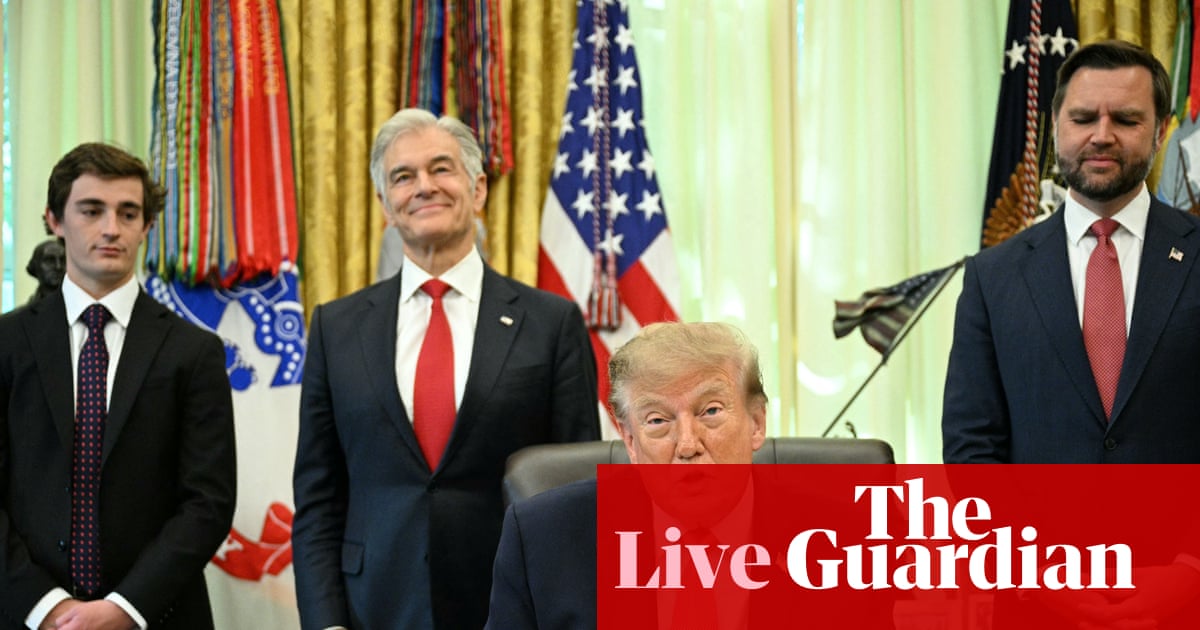
President Trump announced on Tuesday that he will have spent $400 million supporting Republican candidates ahead of the 2026 midterms, a figure that frames his continued involvement in the election. In the same Oval Office session, he introduced the Fraud Whistleblower Incentive Program, a federal mechanism that would pay citizens who report government fraud. Trump said he would personally serve as the final decision-maker on who gets paid and how much, an unusual move that places a sitting president directly above a law-enforcement and financial program administered by the Department of Justice.
Main Story
During a Tuesday Oval Office event that included Vice President JD Vance and YouTuber Nick Shirley, Trump detailed two distinct but politically linked initiatives. The first was a campaign-funding update: he framed the 2026 midterm elections as the most important in the country’s history and said his administration had already devoted over $300 million to Republican candidates and the broader Republican effort. He projected the total will reach $400 million by November. The figure is a substantial personal and aligned investment at a time when Republicans face the risk of losing control of at least one chamber of Congress.
The second initiative, the Fraud Whistleblower Incentive Program, expands a mechanism that would reward any person who reports fraud against the federal government. Unlike the existing False Claims Act, which offers whistleblowers between 25% and 30% of recovered proceeds under strict conditions, this new program is intended for broader, quicker access. Trump said anyone can submit a tip and be paid a share of the fraud reported, even if the figure is enormous. He told reporters the government’s own America.gov/fraud page lists a cap of $30,000 for successful reports that result in criminal charges, but that he considers that cap inapplicable.
Trump then positioned himself as the ultimate judge of these claims. He said that when multiple people submit the same fraud tip, disputes will arise over who should receive the money and when. He stated he would resolve those disputes personally and that his decisions would be generous. Vance, who leads the White House task force focused on eliminating fraud, joked during the event that Trump was quitting while ahead, in reference to the president’s self-described role in the process.
Why It Matters
The announcement matters on two fronts. First, it marks an unusual degree of presidential involvement in a criminal-justice and financial program that traditionally sits under the Department of Justice and other law-enforcement agencies. The DOJ’s own website describes the department as having sole discretion in issuing rewards and exercising its authority in the program. There is no published provision in that description for a sitting president to act as an arbitrator of individual bounty claims.
Second, the financial scale of the effort is a signal of how seriously the administration views the 2026 midterms. The $400 million figure, if confirmed, would be a major coordinated campaign push, and the combination of it with a new fraud-reporting mechanism suggests a dual strategy: support the GOP electoral effort while amplifying a popular anti-fraud narrative that has gained traction through social-media investigations, particularly in Minnesota.
Political Context
The whistleblower program was announced amid an ongoing administration push against fraud in Minnesota, where Nick Shirley’s video alleging abuse at childcare centers helped fuel public outrage. Shirley was present at the Oval Office event as the first person to benefit from the program. The administration has framed the fraud task force as a way to reclaim public trust and to expose what officials describe as systemic fraud in federal and state-run programs.
Democrats and election-watchers are likely to treat the $400 million disclosure as evidence that the White House is treating the midterms as a existential challenge for the GOP. Republican strategists have warned that losing either the House or the Senate could trigger a wave of legislative and administrative obstacles in the final two years of Trump’s term.
What Officials and Groups Are Saying
The Department of Justice did not immediately provide comment in response to inquiries from The Guardian about how a sitting president would fit into a program that the department administers. The White House also did not provide a written statement clarifying the legal basis for Trump’s self-appointed role. CBS News reported that when pressed, Trump stated there is no cap on whistleblower compensation and that criminal charges are not necessary for payment.
The announcement comes as the administration continues to defend its aggressive enforcement stance on fraud, immigration, and other domestic programs. The juxtaposition of a large midterm spending pledge with a new citizen-facing reward scheme suggests a strategy to convert anti-fraud energy into electoral momentum.
Timeline
- 1986 — The False Claims Act created a predecessor framework for whistleblower rewards, allowing claimants to receive a percentage of recovered funds under stringent conditions.
- 2025 — The White House launched a task force focused on eliminating federal fraud, led by Vice President JD Vance.
- 2026, early October — Nick Shirley, a YouTuber, published allegations of fraud at childcare centers in Minnesota, drawing national attention.
- October 20, 2026 — Trump announced in the Oval Office that he will have spent $400 million on Republican midterm support. In the same session, he introduced the Fraud Whistleblower Incentive Program and said he would serve as the final decision-maker on payouts.
- 2026, November 3 — The midterm election date, by which Trump said the $400 million figure would be realized.
Frequently Asked Questions
- What is the Fraud Whistleblower Incentive Program? It is a federal program that would pay citizens who report fraud against the U.S. government and taxpayers. Trump said eligible reporters would receive a share of the amount of fraud they uncover.
- How much can a whistleblower be paid? The America.gov/fraud site lists rewards up to $30,000 when a report leads to criminal charges. Trump told CBS News that he does not believe there is a cap and that criminal charges are not required.
- Will Trump personally decide who gets paid? Trump said he will be the arbitrator for disputes over who submitted a tip and how much each person should receive. He described his decisions as generous and promised fairness.
- How does this differ from the False Claims Act? The False Claims Act allows some whistleblowers to receive 25% to 30% of recovered proceeds, but it imposes strict conditions. The new program is designed for broader, faster access to rewards.
- What did Trump say about midterm spending? He said he will have spent $400 million supporting Republican candidates by the November 3 election and that over $300 million had already been spent as of Tuesday.
What Happens Next
The DOJ will need to clarify how the program operates on the ground, especially in light of the president’s self-described role as final decision-maker. The White House and Justice Department will likely face questions about legal authority, conflict of interest, and the practicality of a sitting president adjudicating individual bounty claims. The $400 million midterm figure will be tracked through November 3, and any subsequent spending disclosures will test the scale of the campaign push. For now, the administration is moving on two tracks: reinforcing its anti-fraud message with a new citizen-facing reward mechanism, and staking out a sizable financial commitment to keep the GOP competitive in the midterm election.
More from the US Elections desk
 New
Judge Blocks Trump Bid to Segregate 20,000 Ballots
A federal judge rejected the Trump administration’s request to segregate roughly 20,000 California mail ballots ahead of the…
 New
Obama Back on Trail in Ohio, Michigan for 2026 Midterms
Barack Obama storms back onto the campaign trail in Cleveland and Detroit, ripping Trump and Ramaswamy as Democrats fight for…
 New
Trump Backs Ramaswamy Ad Featuring Acton's Estranged Mother
President Trump urged Vivek Ramaswamy to keep running a controversial ad featuring Amy Acton's estranged mother, deepening a…
 New
Final Michigan Senate Debate: El-Sayed, Rogers Clash on Trust
Abdul El-Sayed and Mike Rogers fought over who voters can trust in the final Michigan Senate debate. The toss-up race could…