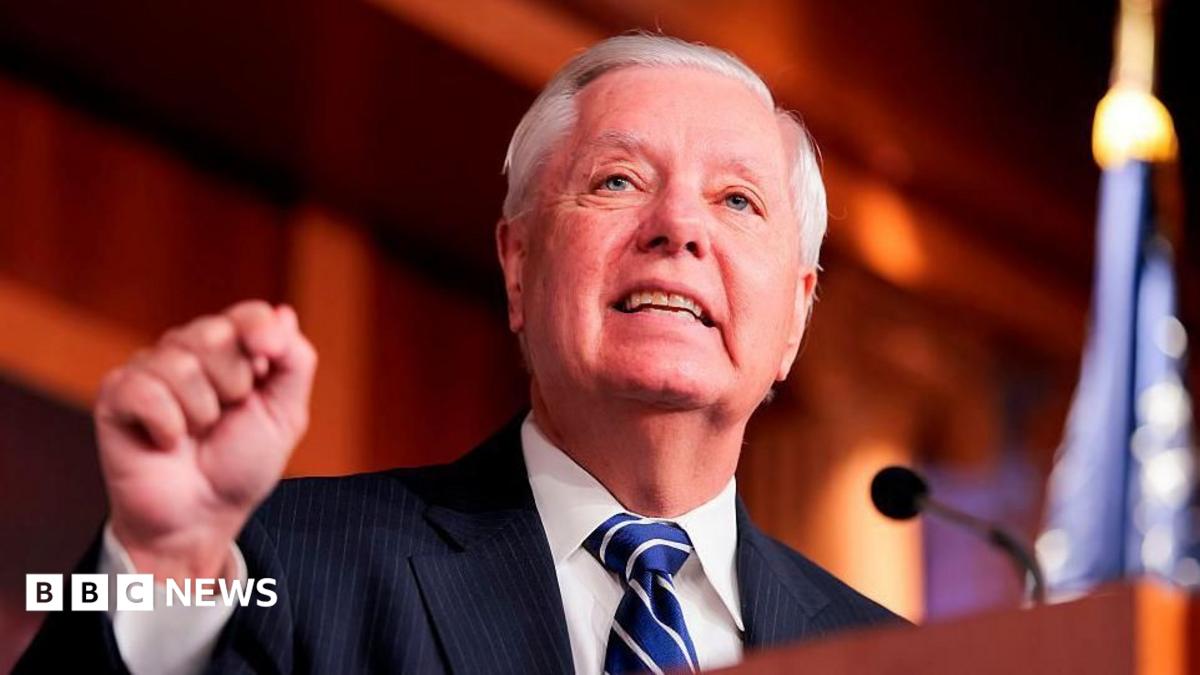
Senator Lindsey Graham of South Carolina, a towering figure in Republican politics and a close ally of President Donald Trump, died Saturday evening at age 71 after a brief and sudden illness, his office confirmed early Sunday. The senator had just returned from a trip to Kyiv, where he met with Ukrainian President Volodymyr Zelensky on Friday, and there were no known health concerns ahead of his travel, according to BBC News. His death sent shockwaves through Washington and the Republican Party, with tributes pouring in from across the political spectrum.
Main Story
Senator Lindsey Graham, a Republican from South Carolina who served in the Senate since 2003, died Saturday evening after a brief and sudden illness, his office confirmed in a statement early Sunday. The statement noted that Graham's family appreciates prayers and asks for privacy during this difficult period, according to CBS News. No further details on the cause of death were immediately released, but emergency personnel responded to a call for cardiac arrest at Graham's Capitol Hill home on Saturday night, according to police scanner audio obtained by NBC News. Photographs reviewed by NBC News showed paramedics carrying a person on a stretcher from Graham's home to an awaiting ambulance, with police cars and fire trucks also on site.
Graham had just returned from a trip to Kyiv, where he met with Ukrainian President Volodymyr Zelensky on Friday. The visit was part of his ongoing work on a version of the Russia sanctions bill, which he described as giving tools to President Trump to end the war, according to BBC News. A top staffer told NBC News's Kristen Welker that there was no indication the senator was not feeling well before his death, as reported by NBC News.
Why It Matters
Graham was one of the most influential voices in the Senate on foreign policy and defense, serving as chairman of the Senate Budget Committee and as a member of the Appropriations, Judiciary, and Environment and Public Works committees, according to Al Jazeera. He was a strong proponent of US support for Ukraine and a staunch supporter of Israel. His death leaves a significant void in the Republican caucus and in Congress's approach to national security issues.
Political Context
Graham's political journey was marked by a dramatic evolution in his relationship with Donald Trump. In 2016, Graham ran for the Republican presidential nomination and was an outspoken critic of Trump, according to The Guardian. After the US Capitol riots in 2021, Graham delivered a speech on the Senate floor in which he distanced himself from Trump, but he later became one of Trump's staunchest backers and supported him in the 2024 election, as reported by BBC News. Graham acknowledged a dark side to Trump but cited his record on the southern border, the killing of Iran's Qasem Soleimani, and the appointment of conservative judges as reasons for his support.
Graham was a hawk on foreign policy, supporting the Iraq war and long urging military action against Iran. He opposed the nuclear agreement negotiated by President Barack Obama and was a strong supporter of Israel, according to The Guardian. He also opposed the withdrawal of US troops from Afghanistan in 2021, describing it as a sad and dangerous event for US national security, as reported by BBC News.
What Officials and Groups Are Saying
President Donald Trump led tributes, calling Graham one of the greatest people and senators he has ever known and a true American Patriot in a Truth Social post, according to CBS News. Israeli Prime Minister Benjamin Netanyahu paid tribute, saying Israel has lost one of its greatest friends and America has lost a great patriot, as reported by CBS News. Israel's President Isaac Herzog said he was shocked and heartbroken to learn of the sudden passing of the great American patriot and a great friend of Israel, according to CBS News. Israel's Defense Ministry also expressed sadness over Graham's death, noting that he stood with Israel in its most difficult time, as reported by Al Jazeera.
Timeline
- July 9, 1955: Lindsey Graham born in Central, South Carolina — CBS News
- 1994: Elected to the US House of Representatives for South Carolina's 3rd district — Al Jazeera
- 2002: Elected to the US Senate — BBC News
- 2016: Ran for Republican presidential nomination, dropped out before primaries — Al Jazeera
- January 6, 2021: Delivered Senate floor speech distancing himself from Trump after Capitol riots — BBC News
- July 10, 2026: Visited Kyiv, met President Zelensky — BBC News
- July 11, 2026: Died at his Capitol Hill home — CBS News
Frequently Asked Questions
What was the cause of Senator Graham's death?
His office stated he died from a brief and sudden illness. Emergency personnel responded to a call for cardiac arrest at his home, according to NBC News.
How old was Lindsey Graham?
He was 71 years old, having been born on July 9, 1955, according to CBS News.
Was Graham running for reelection?
Yes, he was seeking a fifth six-year Senate term in November 2026, according to Washington Post.
What was Graham's role in foreign policy?
He was a leading Republican voice on defense and foreign policy, a strong supporter of Ukraine and Israel, and chairman of the Senate Budget Committee, according to BBC News.
How did President Trump react to Graham's death?
President Trump called Graham a true American Patriot and one of the greatest people and senators he has ever known in a Truth Social post, according to CBS News.
What Happens Next
Senator Graham's death creates a vacancy in the Senate that will need to be filled by South Carolina's governor, who will appoint a temporary replacement until a special election can be held. The loss of Graham, a key Republican voice on foreign policy and a close Trump ally, will reshape the dynamics of the Senate and the Republican Party as the 2026 midterm elections approach. His absence will be felt particularly in debates over Ukraine aid, Iran policy, and Israel support. The nation continues to mourn a senator who served for more than two decades and left an indelible mark on American politics.
More from the Congress desk

Fauci Invokes Fifth Amendment, Refuses to Testify at Senate COVID Hearing
Dr. Anthony Fauci invoked his Fifth Amendment right at a Senate hearing on COVID-19 origins, accusing Sen. Rand Paul of an…

Trump Eulogizes Lindsey Graham as 'Beloved Friend' at Washington Funeral
President Trump delivered a eulogy for Sen. Lindsey Graham at Washington National Cathedral, calling him a 'true American…

House Passes Stopgap Spending Bill to Avert Shutdown, Senate Fight Looms
The House approved a short-term funding bill to keep the government open through Dec. 4, but the measure faces an uncertain…

Darline Graham Sworn In to Replace Late Brother Lindsey Graham
Darline Graham, sister of the late Sen. Lindsey Graham, was sworn in Tuesday to fill his seat, a historic first sibling…