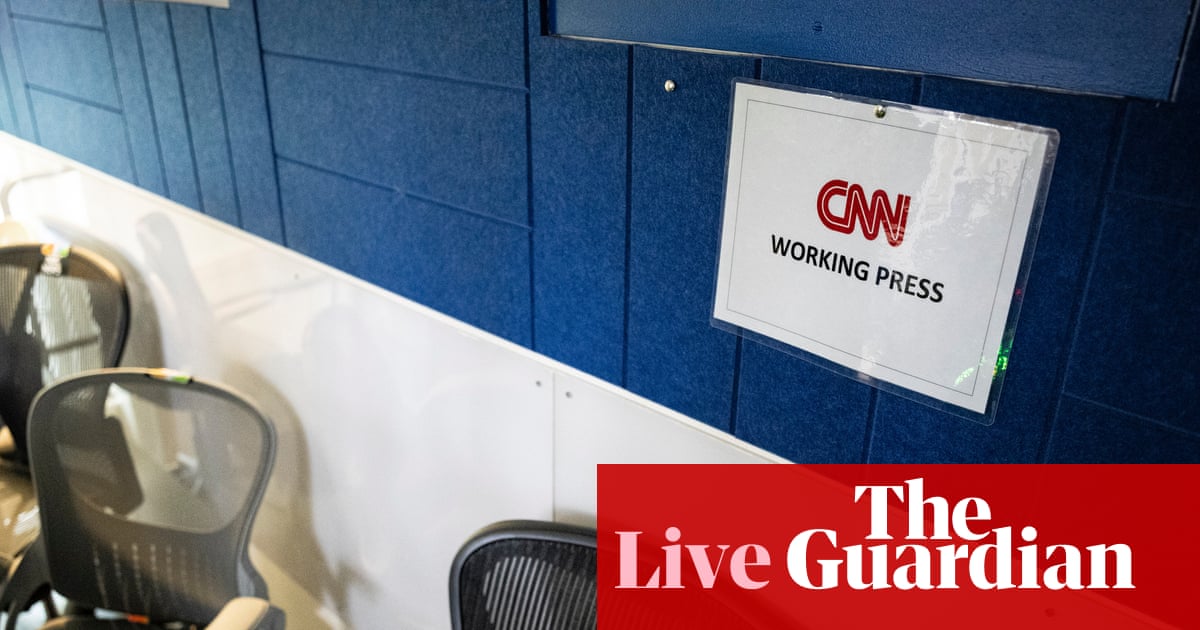
The Justice Department on Tuesday defended President Donald Trump's decision to bar CNN, Politico and MS NOW from the White House, telling a federal court in Washington, D.C., that access to the grounds is a privilege rather than a right and that the outlets' reporting raised national security concerns. The filing came one day after the three news organizations sued Trump, alleging the ban violates the First Amendment. A federal judge is expected to hold a hearing Wednesday at 3:30 p.m. ET on the outlets' request for a temporary restraining order that would lift the ban while the case proceeds.
Main Story
The legal fight over White House press access intensified Tuesday as the Justice Department submitted a filing in federal district court in Washington, D.C., arguing that President Donald Trump's ban on CNN, Politico and MS NOW is legally sound. According to the filing, the president concluded that the three outlets fail to satisfy minimum requirements of professionalism by relying on anonymous sources and not giving the White House enough time to comment. The Justice Department also claimed the organizations violated decorum by publishing classified or sensitive national security information.
The filing included letters from the White House press office, dated Tuesday, to each of the three outlets notifying them that the president had decided to revoke their journalists' hard passes. The letters claim the outlets exhibited behavior in violation of the standards of professionalism and decorum expected of those given access to the White House Complex. The Justice Department asked Judge Timothy Kelly to allow Trump to enforce the ban while the case proceeds.
CNN, Politico and MS NOW sued Trump on Monday, days after the president announced the ban and their reporters had their credentials confiscated. In a joint statement confirming the legal action, the outlets argued that without notice or process, the White House revoked their journalists' credentials because it objected to their reporting. They said that left unchallenged, the move threatens press freedom and the public's right to independent journalism free from government interference.
The three organizations have argued that the ban breaches their rights under the First Amendment, which forbids the government from abridging the freedom of the press. The Justice Department countered that the president's ban complies with the First Amendment because the government has at least two compelling reasons for denying access: enforcing minimum standards of professionalism for the press and protecting classified information.
Why It Matters
The case tests the boundaries of presidential control over who may report from the White House and whether the First Amendment limits the executive branch's ability to exclude specific news organizations. While the White House has broad discretion over physical access to its grounds, the outlets argue that punishing them for coverage they have already published amounts to unconstitutional retaliation. The outcome could set a precedent for how future administrations handle press credentials and could reshape the relationship between the president and the news media.
The dispute also comes amid broader tensions between Trump and major news organizations. Major TV networks have withdrawn from a media-sharing arrangement of video and images of the president, known as the pool, in protest over the ban. Shortly after, the White House launched its own streaming channel, Trump TV, which operates a 24/7 feed of clips of the president. The pool withdrawal means the public may see fewer independent images of the president at official events, while Trump TV offers a curated alternative.
Political Context
The ban follows a series of clashes between the administration and the press. According to the Justice Department's filing, the three outlets were issued a list of reporting incidents by the White House ahead of the ban. The filing cites a number of stories about construction at the White House, including about a security bunker and the building of a new ballroom, as well as a report on an internal information leak investigation. The administration has characterized those stories as falsehoods and a security risk.
Trump has repeatedly attacked the outlets, calling them treasonous and accusing them of spreading fake news. On Tuesday, tensions continued as Trump told CNN reporter Kaitlan Collins before his speech to the United Nations General Assembly that he was surprised CNN was there covering him and that she should not be there. Collins noted later on air that the network had made no such pledge. Trump also took to social media to attack Collins, asking why she and others were reporting on the president at the UN.
The White House has defended the ban as a necessary measure to protect national security and maintain professionalism in the briefing room. The Justice Department's filing argues that the president believes basic journalistic standards require calling, asking for comment, and providing a reasonable opportunity for a response. At a bare minimum, the filing says, it is a significant violation of decorum to publish classified and sensitive national security information.
What Officials and Groups Are Saying
The Justice Department has framed the ban as a matter of presidential discretion, stating in its filing that access to the White House is a privilege, not a right. The department also accused the outlets of trafficking in verifiable falsehoods and reporting that threatened national security. The White House press office letters to the three outlets reiterated that the president had revoked their hard passes due to violations of professionalism and decorum.
The three news organizations have pushed back forcefully, arguing in their lawsuit that the ban is unconstitutional and that it threatens press freedom. In their joint statement, they said the White House revoked their credentials without notice or process because it objected to their reporting. They warned that if left unchallenged, the move threatens the public's right to independent journalism free from government interference.
Media advocacy groups and press freedom organizations have not yet issued formal statements in the source material, but the pool withdrawal by major TV networks signals significant industry concern. The networks' decision to stop sharing video and images of the president is a rare collective action against a White House press policy. The White House's launch of Trump TV suggests the administration is prepared to bypass traditional media channels to reach the public directly.
Timeline
- Last week: President Trump bars CNN, Politico and MS NOW from the White House, accusing them of spreading fake news.
- Days later: Reporters from the three outlets have their hard passes confiscated and are denied access to the building.
- Monday: CNN, Politico and MS NOW jointly sue Trump, calling the ban unconstitutional.
- Tuesday: The Justice Department files court documents defending the ban, citing national security and professionalism. The White House press office sends letters to each outlet notifying them of the revoked hard passes. Trump attacks CNN's Kaitlan Collins over her UN coverage.
- Wednesday, 3:30 p.m. ET: Judge Timothy Kelly is expected to hold a hearing on the outlets' request for a temporary restraining order.
Legal Arguments at a Glance
| Party | Core Argument |
|---|---|
| Justice Department | White House access is a privilege, not a right; the ban complies with the First Amendment because the government has compelling reasons: enforcing minimum standards of professionalism and protecting classified information. |
| CNN, Politico, MS NOW | The ban violates the First Amendment by punishing outlets for their reporting without notice or process; it threatens press freedom and the public's right to independent journalism. |
The judge's decision on the temporary restraining order will determine whether the outlets' reporters can regain access to the White House while the broader case moves forward. If the judge grants the order, the ban would be paused pending a full hearing. If the judge denies it, the ban would remain in effect as the litigation continues.
Broader Implications for Press Freedom
The case raises questions about the extent to which the president can control press access to the White House and whether the courts will intervene. While the White House has long exercised discretion over credentials, the outlets argue that the ban is retaliatory and based on the content of their reporting. The Justice Department's filing suggests the administration views the ban as a matter of enforcing professional standards rather than punishing speech.
The outcome could influence how future administrations handle press credentials and whether news organizations can successfully challenge access restrictions in court. It also underscores the growing tension between the Trump administration and the mainstream media, which has already led to the pool withdrawal and the creation of Trump TV. The case is being closely watched by media lawyers and press freedom advocates as a potential landmark on executive power and the First Amendment.
Frequently Asked Questions
What is the Trump administration's argument for banning CNN, Politico and MS NOW?
The Justice Department argues that access to the White House is a privilege, not a right, and that the ban complies with the First Amendment because the government has compelling reasons: enforcing minimum standards of professionalism and protecting classified information. The department also claims the outlets relied on anonymous sources, did not give the White House enough time to comment, and published sensitive national security information.
What are the outlets arguing in court?
CNN, Politico and MS NOW argue that the ban violates the First Amendment by punishing them for their reporting without notice or process. They say the White House revoked their credentials because it objected to their coverage, and that the move threatens press freedom and the public's right to independent journalism free from government interference.
What is a temporary restraining order and why does it matter?
A temporary restraining order is an emergency court order that would pause the ban while the case proceeds. The outlets have requested one, and Judge Timothy Kelly is expected to hold a hearing on Wednesday at 3:30 p.m. ET. If granted, the order would allow their reporters to regain White House access pending a full hearing.
How have other media organizations responded?
Major TV networks have withdrawn from the White House press pool, a media-sharing arrangement for video and images of the president, in protest over the ban. The White House responded by launching its own streaming channel, Trump TV, which operates a 24/7 feed of clips of the president.
What happens if the judge denies the temporary restraining order?
If the judge denies the order, the ban would remain in effect as the litigation continues. The outlets could appeal the decision or proceed to a full trial on the merits of their First Amendment claim. The case could ultimately reach a higher court, potentially setting a precedent on presidential control over press access.
What Happens Next
Judge Timothy Kelly is expected to rule Wednesday on whether to temporarily lift the ban while the case proceeds. The hearing is scheduled for 3:30 p.m. ET. If the judge grants the temporary restraining order, reporters from CNN, Politico and MS NOW could regain access to the White House grounds pending a full hearing. If the judge denies it, the ban remains in place, and the outlets will likely continue their legal challenge.
The case is part of a broader confrontation between the Trump administration and the news media, with major TV networks already withdrawing from the White House press pool and the administration launching its own streaming channel. The outcome will be closely watched as a test of the limits of presidential power over press access and the First Amendment. Readers should continue following the story as the court weighs whether to intervene and as the administration and the outlets prepare for the next phase of the legal battle.
More from the Judiciary desk
 New
Supreme Court Keeps Transgender Inmate Care Block, Despite Dissent
The Supreme Court upheld a lower-court block preventing the Trump administration from cutting gender-affirming care for…
 New
Judge Clashes With DOJ Over Trump's East Potomac Golf Plan
A federal judge pressed the Trump administration over its plan to shut down and renovate East Potomac Golf Links, as DOJ…
 New
Judge Extends Order Blocking Trump's White House Press Ban
A federal judge extends an order blocking Trump from banning CNN, MS NOW and Politico reporters from White House access, as…
 New
Judge Orders Trump to Cancel $20M Taxpayer-Funded Ads
A federal judge ordered the Trump administration to immediately cancel taxpayer-funded TV ads featuring the president, siding…